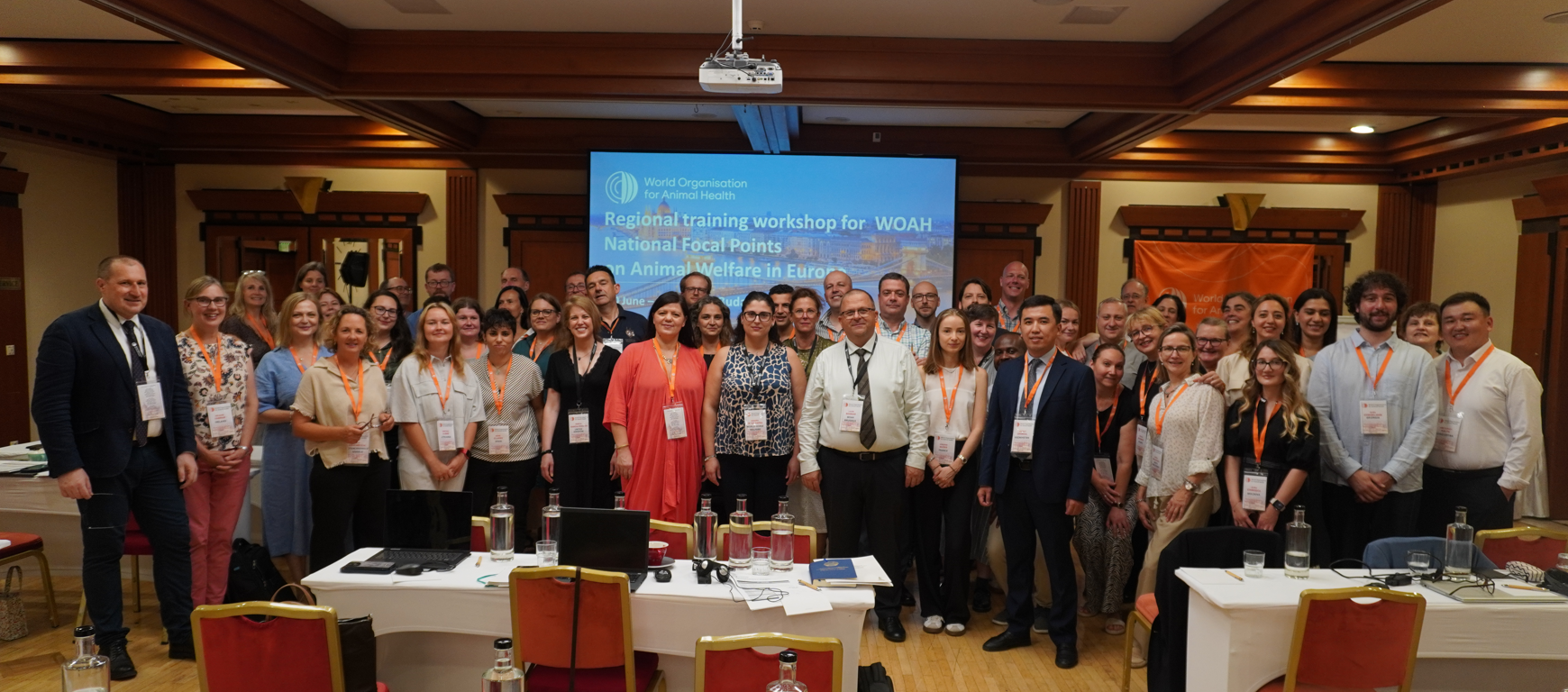
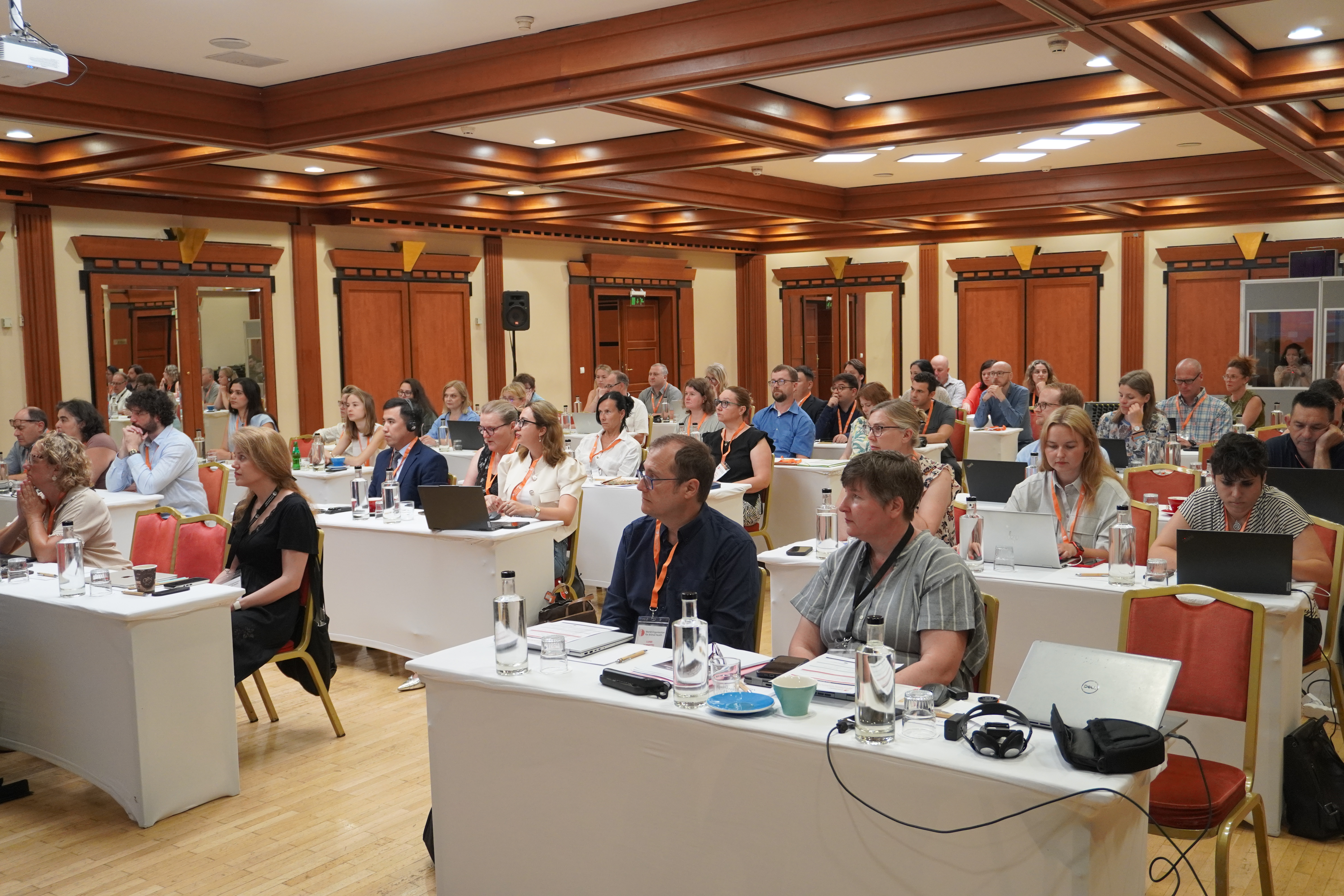
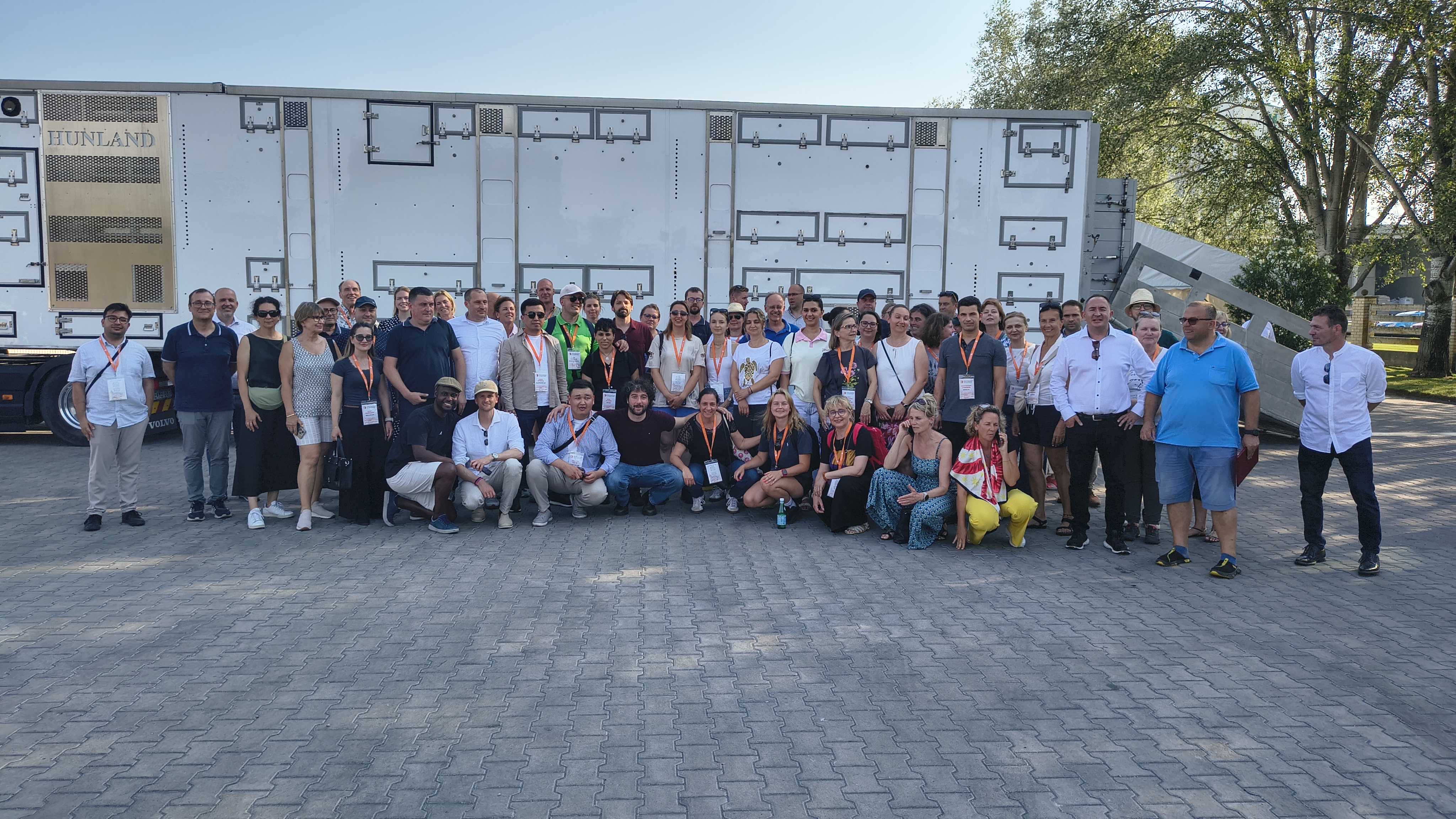
The Regional Training Workshop for WOAH National Focal Points on Animal Welfare brought together National Focal Points (NFP) from across the European region in Budapest, Hungary, from 30 June to 2 July 2026. The event aimed to strengthen the capacity of National Focal Points to support the implementation of WOAH animal welfare standards, promote regional collaboration, and contribute to the development and implementation of animal welfare policies at national and regional levels.
Throughout the three-day programme participants discussed the responsibilities and Terms of Reference of NFP, and received updates on the WOAH Global Animal Welfare Strategy, the activities of the WOAH Platform on Animal Welfare for Europe, including progress towards the development of its 5th Action Plan (2027–2029).
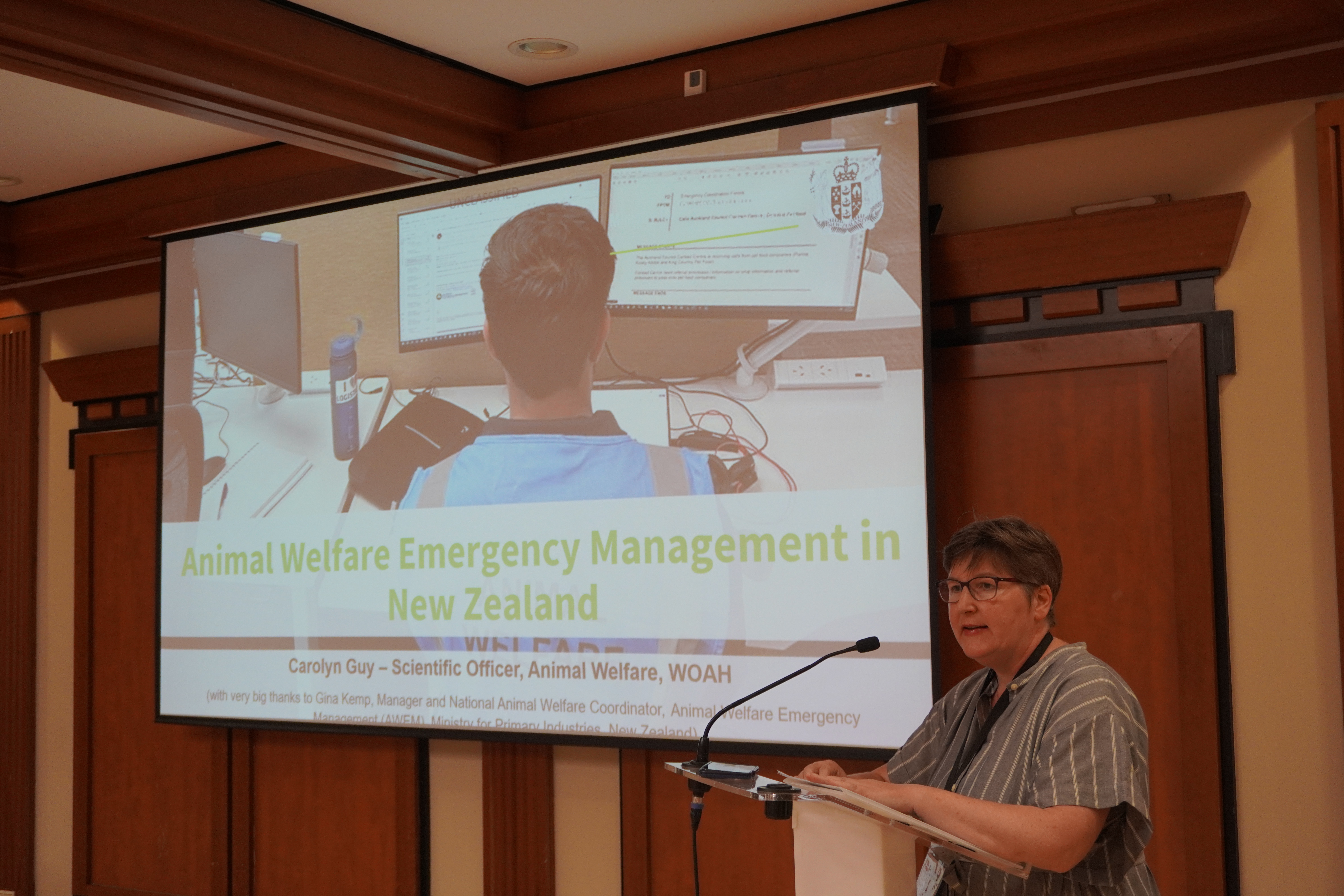
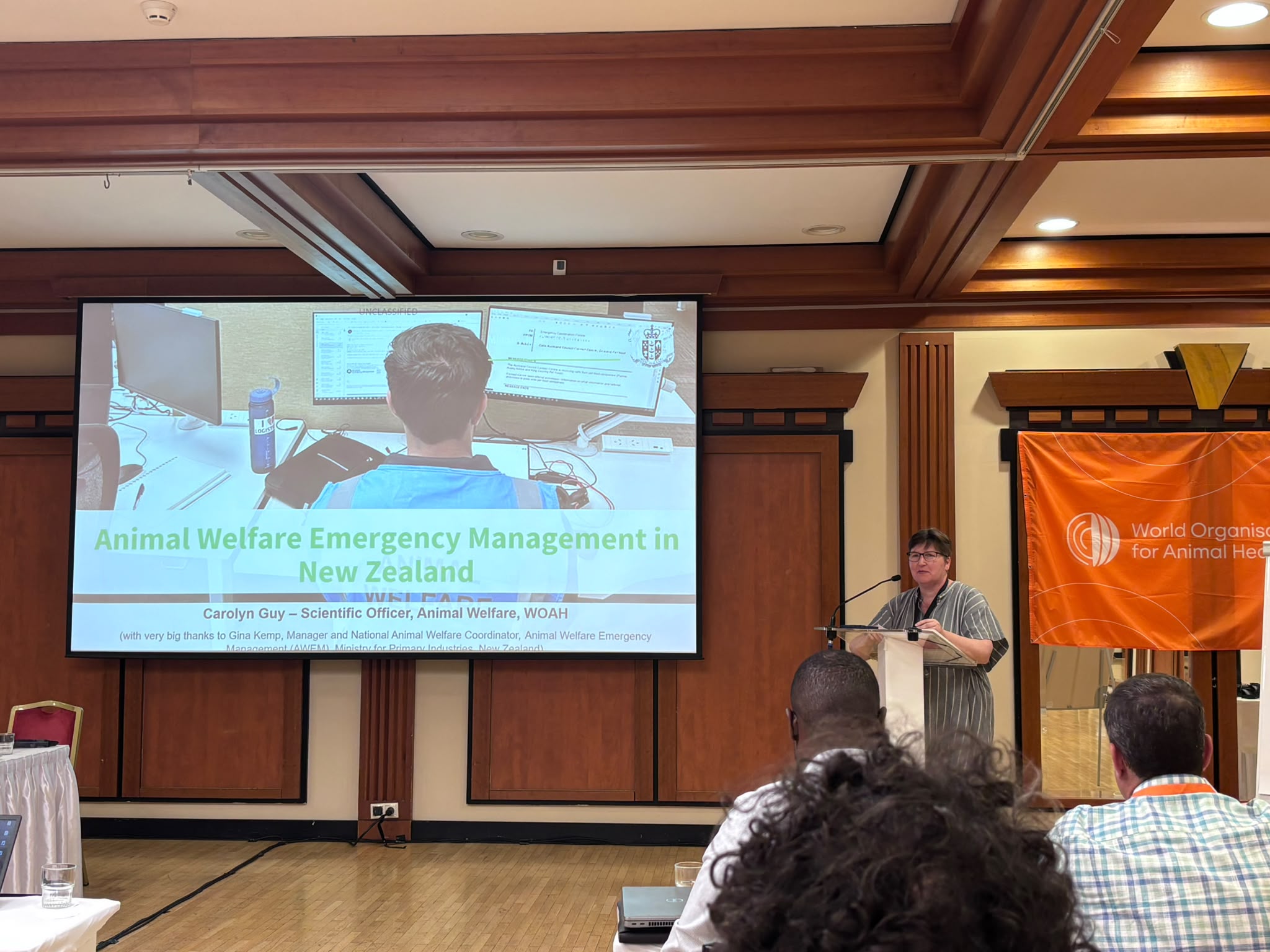
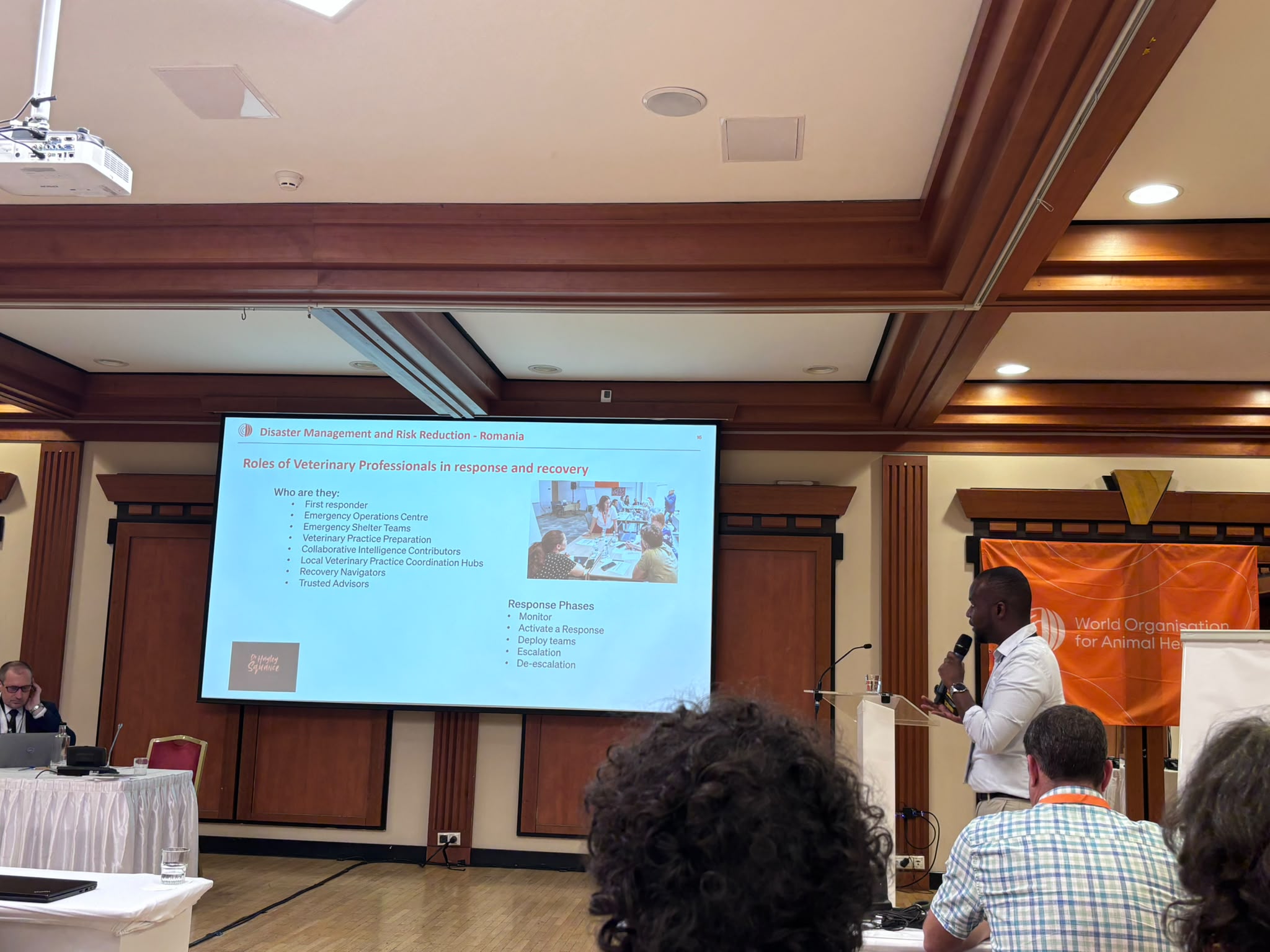
The workshop covered a broad range of topics related to the implementation of international animal welfare standards, including animal welfare as part of the One Health and One Welfare approaches, veterinary ethics and the human–animal relationship, animal welfare in disasters and emergency preparedness, the role of the WOAH Observatory in monitoring the implementation of standards and stakeholder engagement and regional cooperation.
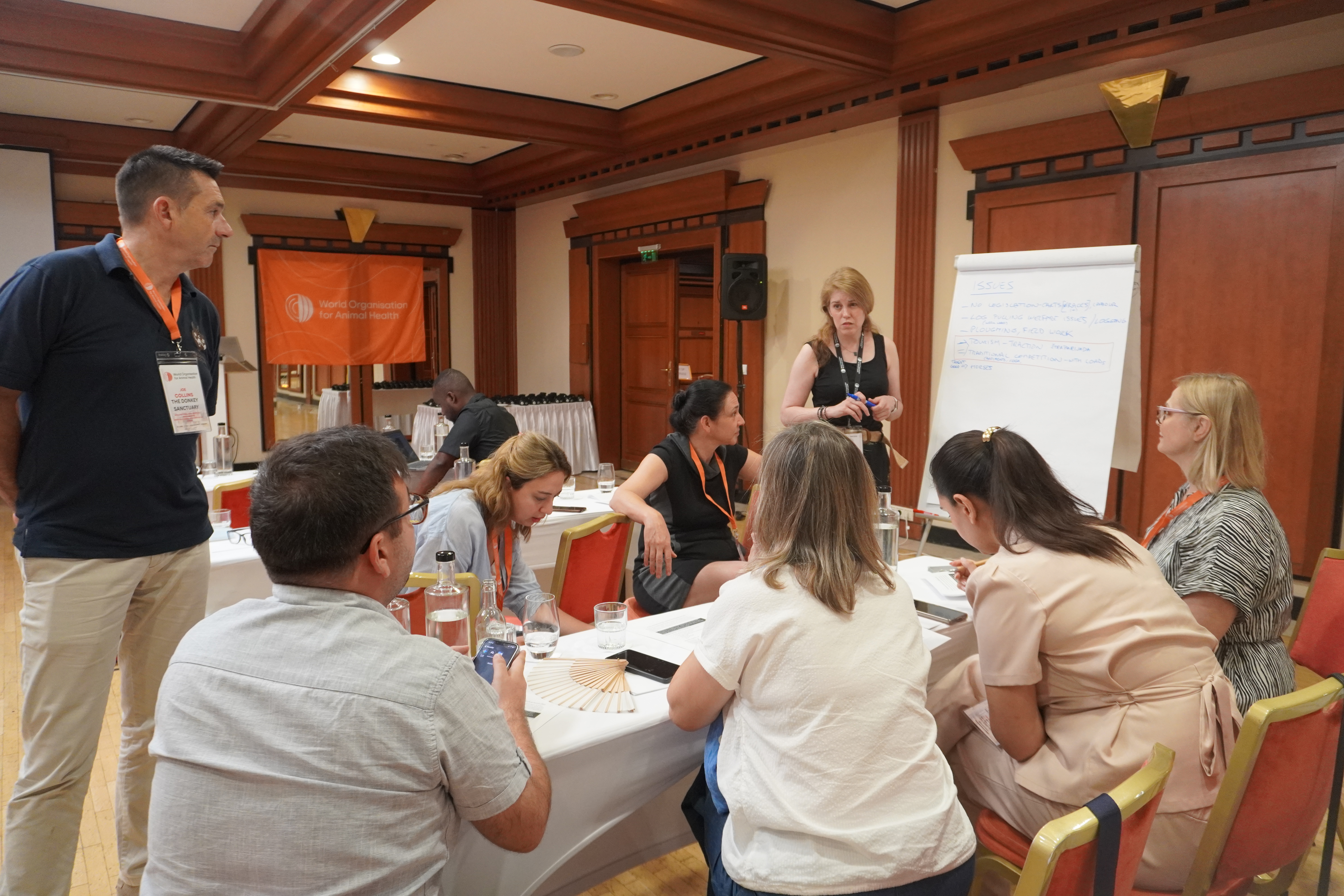
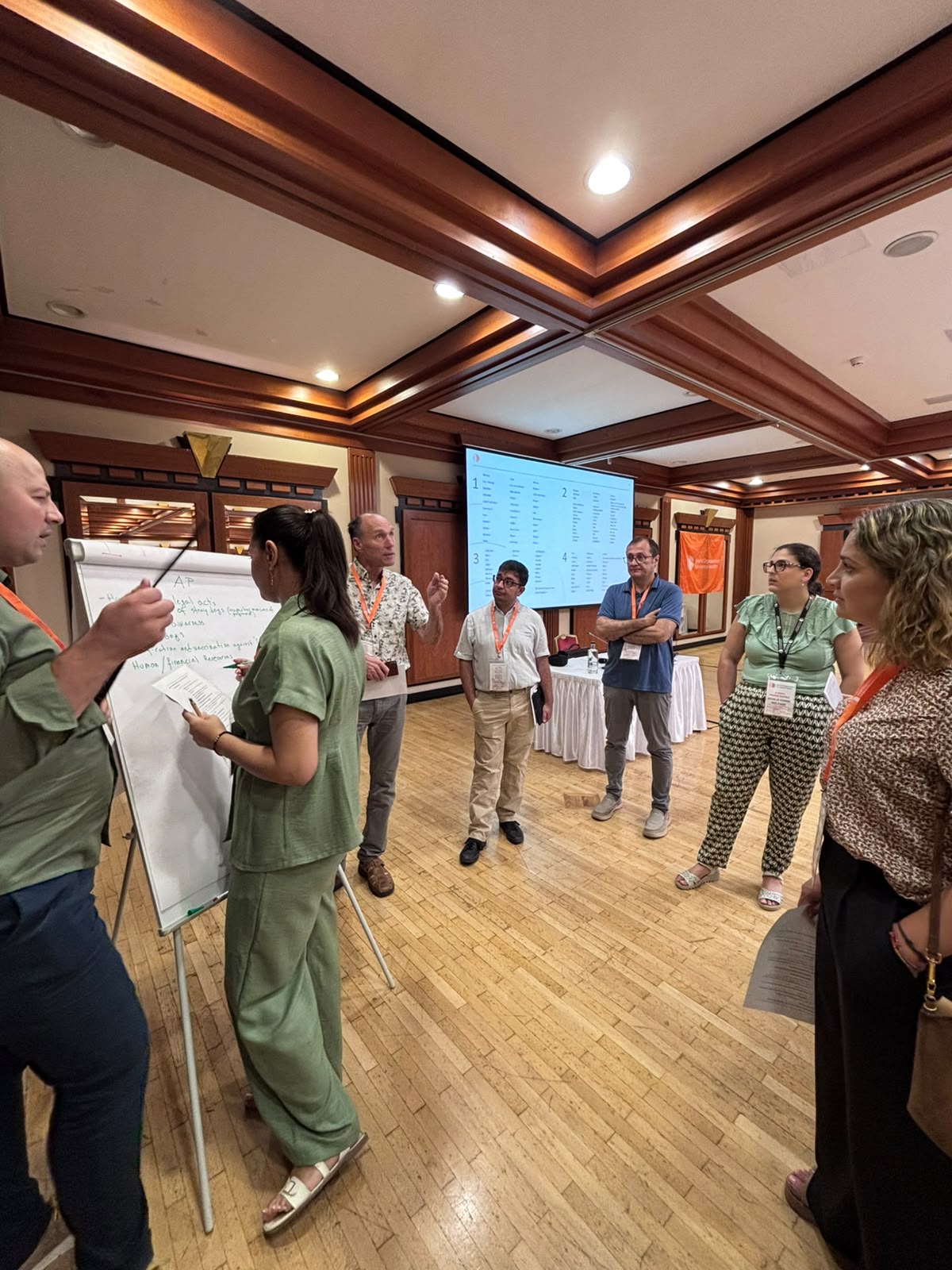
Part of the workshop was dedicated to interactive working group exercises, allowing participants to discuss practical challenges and identify priorities for future action. Discussions focused on the implementation of WOAH standards at national level, stakeholder engagement, and the development of recommendations for the next Regional Platform Action Plan.
The second day focused on the activities of the WOAH Platform on Animal Welfare for Europe, covering its five priority areas:
Participants also contributed to the preparation of the 5th Action Plan (2027–2029) through an interactive consultation, identifying emerging priorities and discussing opportunities to strengthen regional cooperation, capacity building and practical implementation of animal welfare standards.
The afternoon included a field visit, providing participants with an opportunity to observe practical aspects of animal welfare implementation and exchange experiences in a real-world setting, complementing the discussions and technical sessions held during the workshop.
The final day addressed ongoing revisions of WOAH international standards, including the chapters on killing animals for disease control purposes and animal transport, while also presenting regional expertise from WOAH Collaborating Centres on animal welafre, the Federation of Veterinarians of Europe (FVE), and updates from the European Commission on current animal welfare initiatives, including work on dog and cat welfare.
The workshop reinforced the essential role of National Focal Points in facilitating communication between WOAH and Member Countries, supporting the implementation of international standards, strengthening stakeholder collaboration and promoting continuous improvements in animal welfare across the European region.
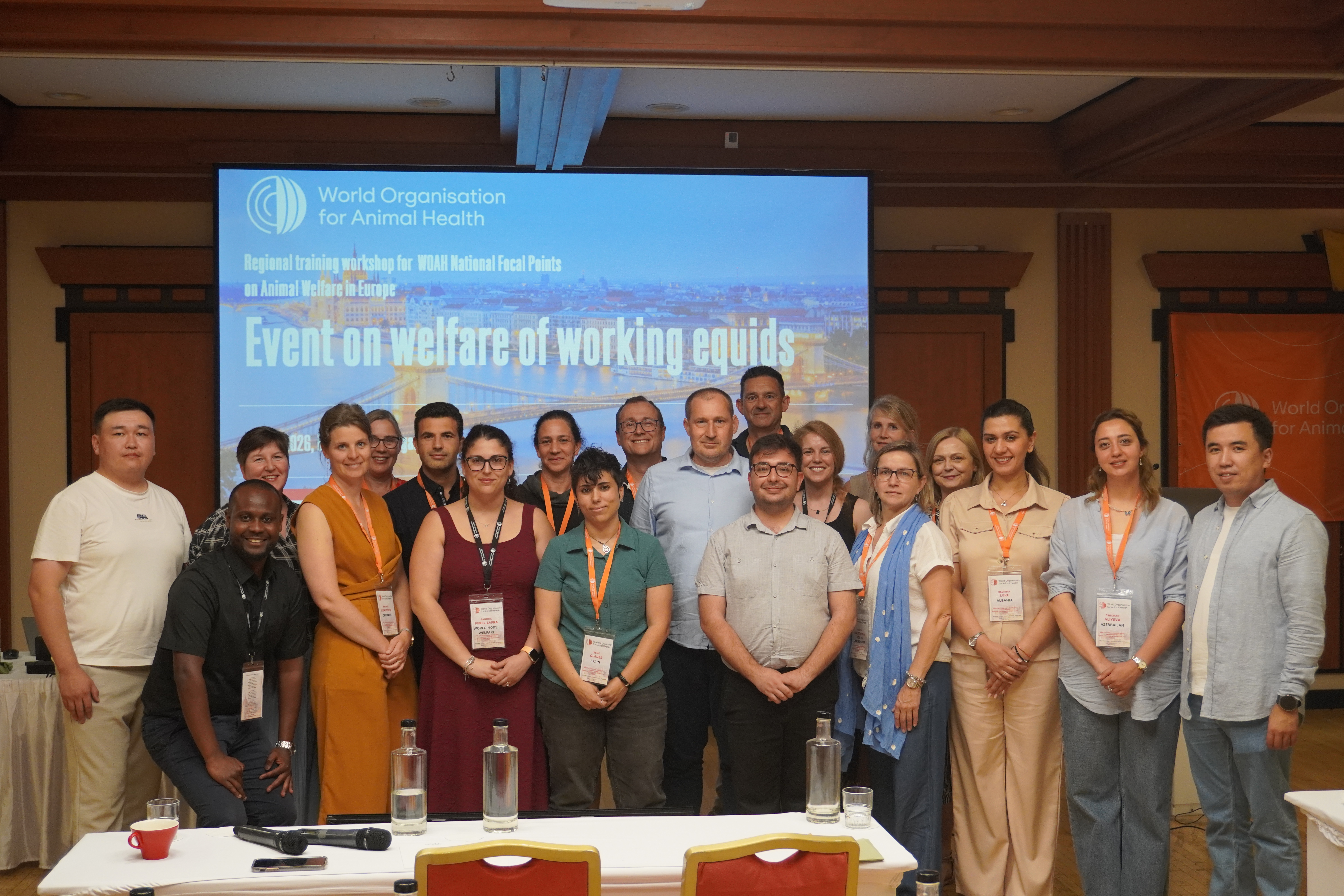
In addtion, following the workshop, a dedicated event on the welfare of working equids brought together representatives from selected countries to exchange national experiences, discuss common challenges and identify future actions to support the implementation of WOAH standards in this area through case studies and interactive group exercises.
| Workshop agenda | |
| Day 1 (30/6/2026) | |
| Session 1: Opening | |
| Introduction, objectives of the workshop and ToRs of the focal points on animal welfare | Carolyn Guy(WOAH AW Global coordinator) |
| WOAH animal welfare working program and Global Animal Welfare Strategy | Carolyn Guy |
| WOAH Platform update | Tomasz Grudnik (WOAH Brussels) |
| Session 2: Advancing implementation of animal welfare standards | |
| Advancing animal welfare: A One Health, One Welfare and ethics perspective | |
| Animal welfare as part of One Health | Carolyn Guy |
| One Welfare | Rebeca Garcia (One Welfare CIC) |
| Veterinary ethics and human-animal relation | Christian Duernberger (Vetmeduni) |
| Disaster and emergencies | |
| Animal welfare in disasters – WOAH activities | Fernando De Abreu (WOAH Brussels) |
| Sharing practical experience and lessons learn | Carolyn Guy |
| Standards Implementation | |
| The role of NGOs in improving animal welfare and supporting the implementation of WOAH standards | Julia Havenstein (Animals’ Angels / International Coalition for Animal Welfare |
| The WOAH Observatory and thematic study on transport of animals | Caroline Paquier (WOAH Observatory) |
| Animal Welfare Action Plans working group exercise introduction | Tomasz Grudnik |
| Day 2 (1/7/2026) | |
| Animal welfare action plans working group exercise | All |
| Session 3: WOAH Regional Platform on animal welfare for Europe | |
| Activities of WOAH Platform on animal welfare for Europe | Tomasz Grudnik
Fernando De Abreu |
| Developing 5th Action Plan for 2027-2029
Interactive exercise Discussion/Q&A |
Tomasz Grudnik |
| Field visit – Hunland Group | |
| Overview of Hunland Group Activities | Jos Janssen |
| Long distance animal transportation and animal welfare at Hunland | Péter Hencz |
| Day 3 (2/7/2026) | |
| Session 4: Revision of animal welfare standards | |
| Revision of the chapter on killing | Carolyn Guy |
| Consciousness at slaughter with and without stunning | Luigi Iannetti (WOAH Collaborating Centre) |
| Revision of the chapters on transport | Maria Correia (Portugal) |
| Session 5: Regional collaboration, capacity building and next steps | |
| WOAH Collaborating Centre on animal welfare | Luigi Iannetti |
| Federation Veterinarians of Europe | Joe Colins (FVE) |
| EU animal welfare activities | Stanislav Ralchev (European Commission) |
| Conclusions and next steps and closing message |