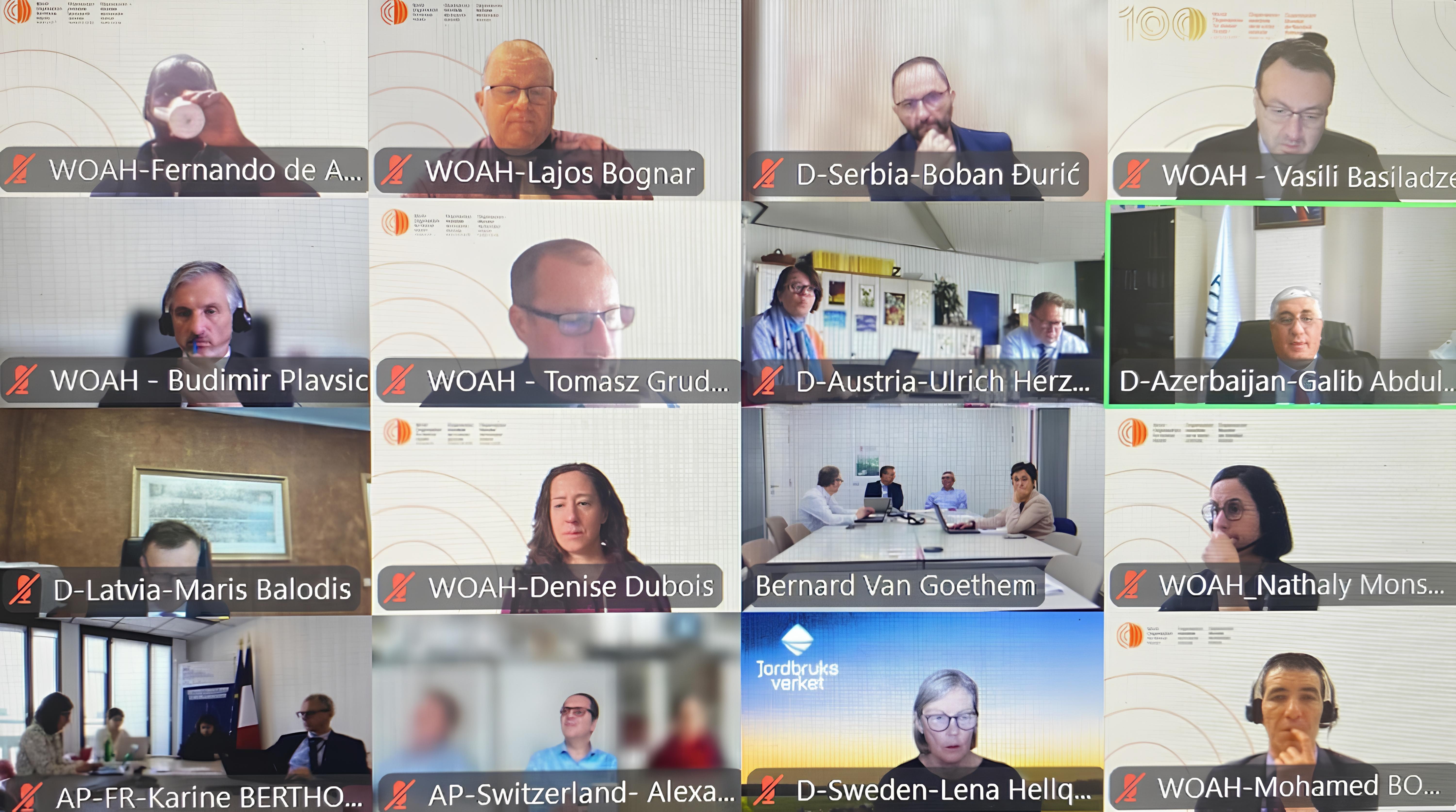
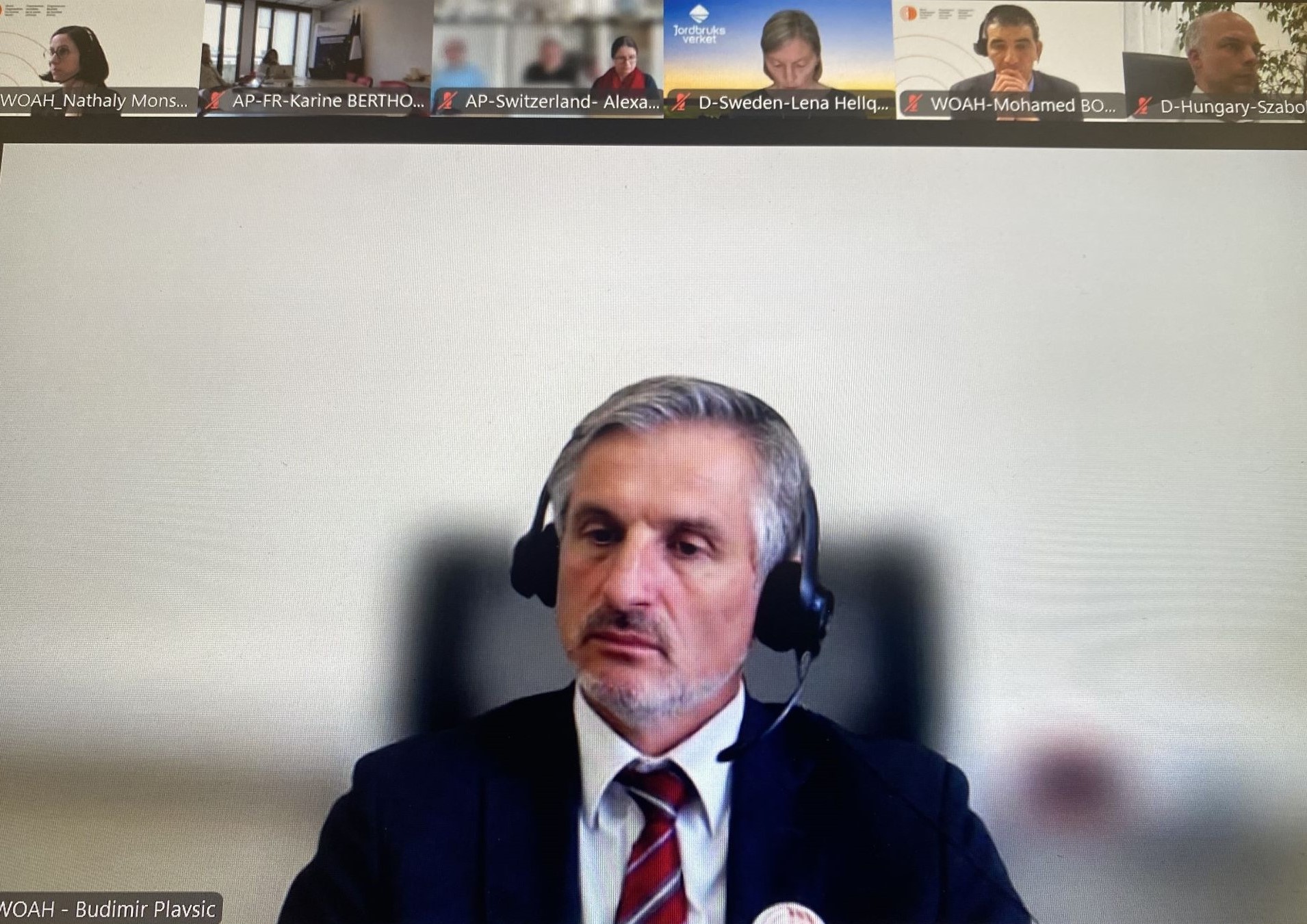
The meeting, chaired by Dr Maris Balodis, President of the Commission and Delegate of Latvia, accompanied by Dr Budimir Plavsic, WOAH Regional Representative for Europe, focused on key priorities ahead of the upcoming 32nd Regional Conference in Riga, Latvia, and on major governance and strategic developments within the World Organisation for Animal Health.
Dr Balodis provided an update on the organisation of the 32nd Conference of the Regional Commission for Europe, scheduled for 21-25 September 2026 in Riga. A short video showcasing Latvia’s agriculture and cultural heritage was shared with participants, followed by a video message from Armands Krauze, Minister for Agriculture of Latvia, who warmly invited all Members to attend the forthcoming event.
He stressed the importance of the One Health approach and the vital role of Veterinary Services in protecting animal health, public health, and food safety. Dr Balodis confirmed that invitation letters had been sent to Delegates in April 2026, and that details on accommodation and visa requirements are available on the official Conference website.
The Commission selected one technical item for inclusion in the Riga Conference agenda – “Emergency preparedness and response to Peste des Petits Ruminants (PPR) and Sheep pox and goat pox (SGP) in Europe.” In addition, three strategic topics of global interest were identified for WOAH to address through scientific reviews, newsletters, or other activities:
These topics reflect the region’s commitment to addressing emerging threats through science-based, coordinated action.
Dr François Caya, Deputy Director General for Institutional Affairs and Governance, presented the process to formally recognise the Mediterranean Animal Health Network (REMESA). Established in 2009, REMESA brings together 15 Members and supports cooperation on transboundary animal diseases and zoonoses in the Mediterranean region.
An external legal review found that while REMESA has operated effectively since 2012 under a Cooperation Framework, it lacks formal legal recognition by WOAH and FAO. To ensure long-term sustainability, the WOAH Council (3 March 2026) and the REMESA Joint Permanent Committee (29 April 2026) both supported formal recognition through a Resolution to be presented at the 93rd General Session.
A draft Resolution has been shared with the REMESA Joint Permanent Committee and will be submitted to the WOAH Council before adoption at the 93rd General Session. Complementary legal arrangements with FAO are also being explored, while preserving REMESA’s current structure.
Camilla Wuensch, Acting Head of the Performance Management Unit, presented WOAH’s 8th Strategic Plan, endorsed by the Council on 3 March and set for adoption in May 2026.
Developed through broad consultation, it incorporates over 300 feedback comments and is structured around three Strategic Orientations – standard-setting, empowering Members’ animal health systems, and positioning AH in global challenges – and four Strategic Enablers: governance, data, people, and accountability. Implementation will rely on roadmaps, monitoring, and costing, building on existing activities with targeted priorities.
Dr. François Caya confirmed that the Plan does not require increased statutory contributions. Success depends on clearly communicating WOAH’s strategic value to mobilise voluntary funding and align donor support with its priorities. Next steps include formal adoption, publication, and regional implementation roadmaps. Dr. Caya also presented the recommendations of the Governance Review Committee (GRC), established under Assembly Resolution No. 12 (2024). The GRC proposed several key reforms to strengthen WOAH’s governance.
Dr Ulrich Herzog, Vice-President of the RCE and GRC member, shared regional views. European Members support:
To improve participation, Dr. Herzog proposed establishing four thematic regional workstreams – covering legal framework, technical governance, institutional governance, and financial governance – coordinated by the Regional Core Group. He encouraged all experts to engage actively in these discussions.
Participants welcomed the proposal and stressed the need for better coordination, including support from Regional Representations to collect and consolidate inputs.
Dr. Balodis also reported on the outcomes of the 20th Regional Core Group Meeting (17 March 2026), which endorsed the 2025 Annual Report and the 2026 workplan. The Group focused on preparing for the 93rd General Session and the Riga Conference, including alignment on technical items and standard-setting processes. Finally, participants were reminded of key events during the 93rd General Session:
The meeting underscored the RCE’s active role in shaping WOAH’s future. With strong regional collaboration and a clear focus on science, transparency, and sustainability, the Commission continues to strengthen animal health systems across Europe and beyond.