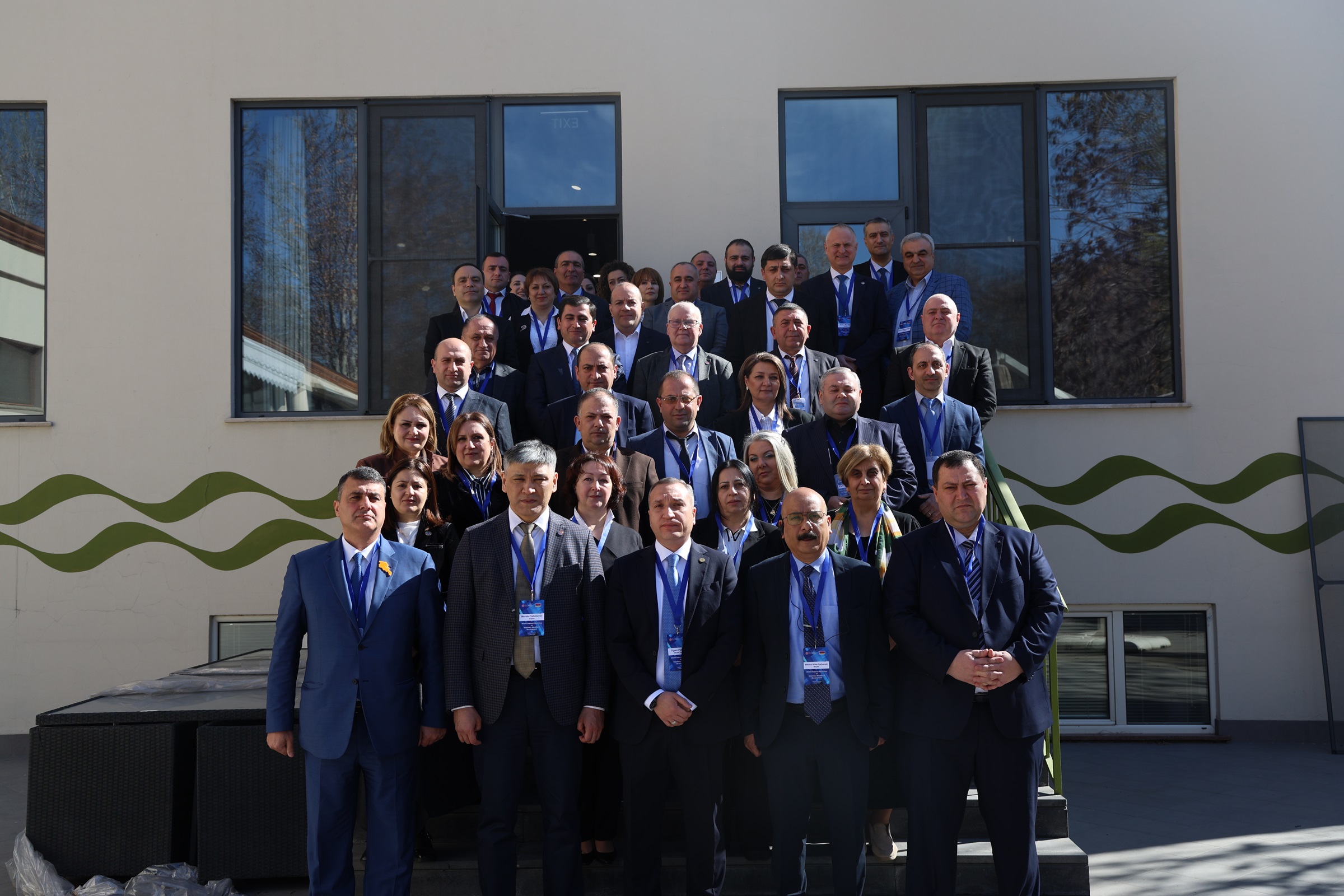
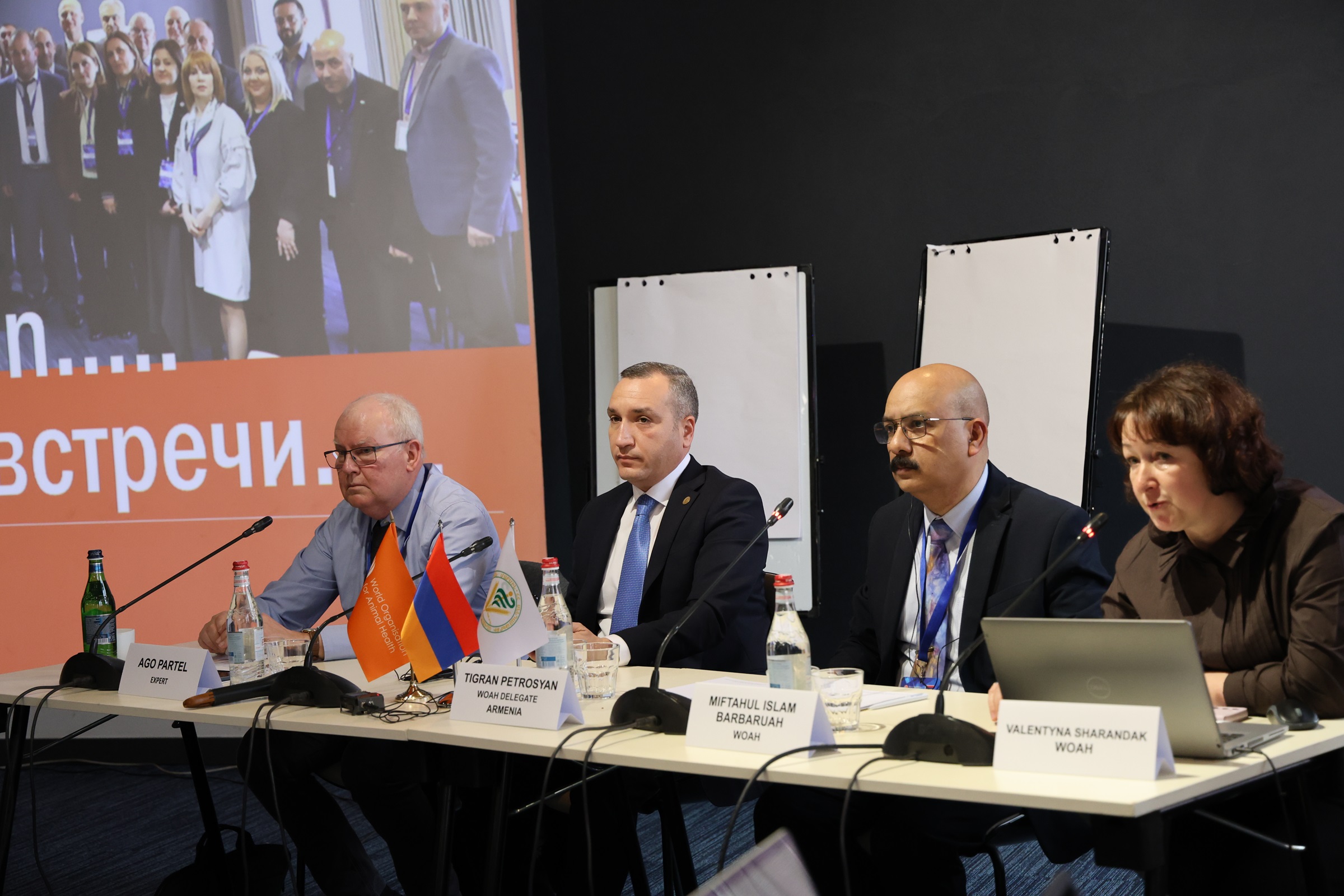
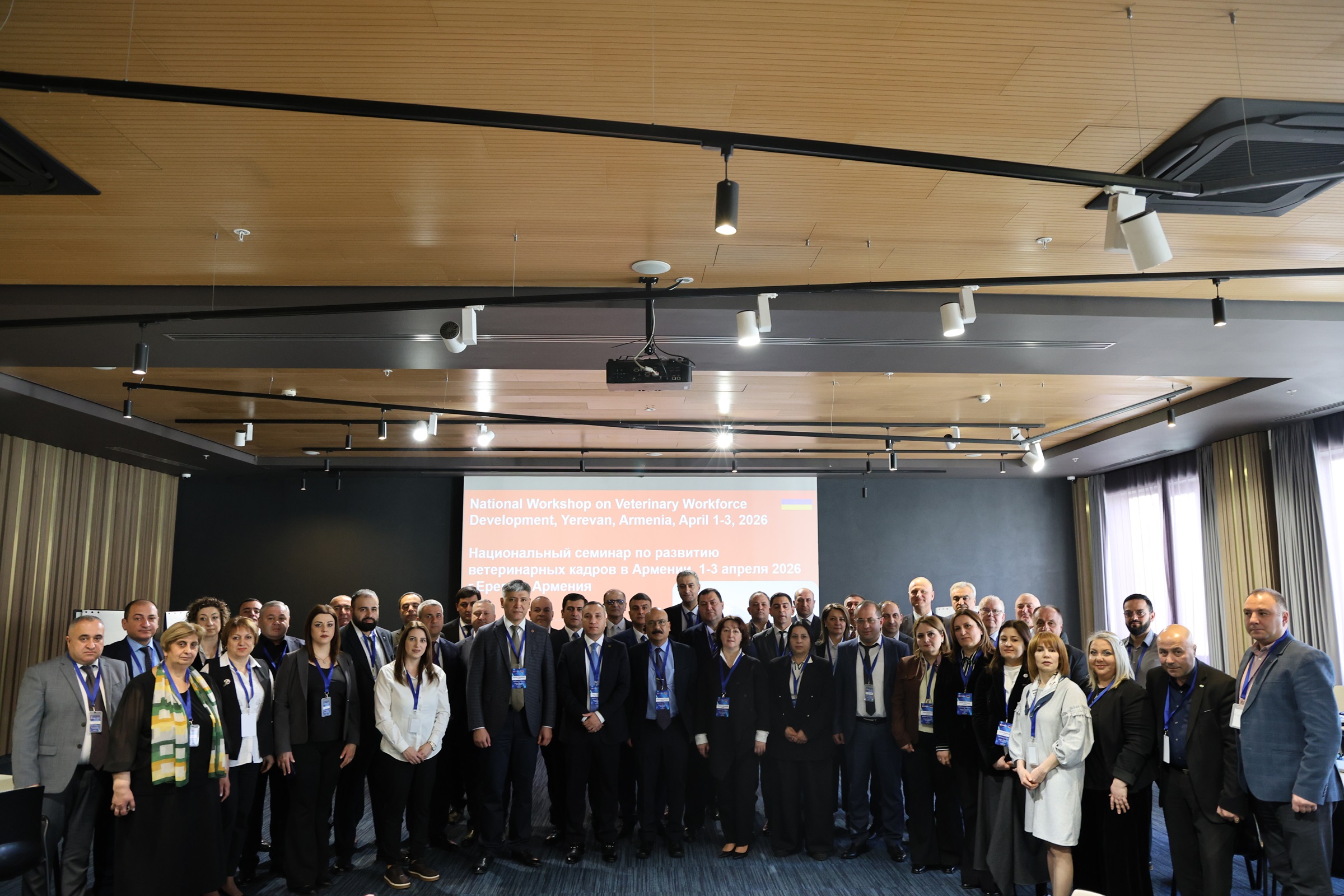
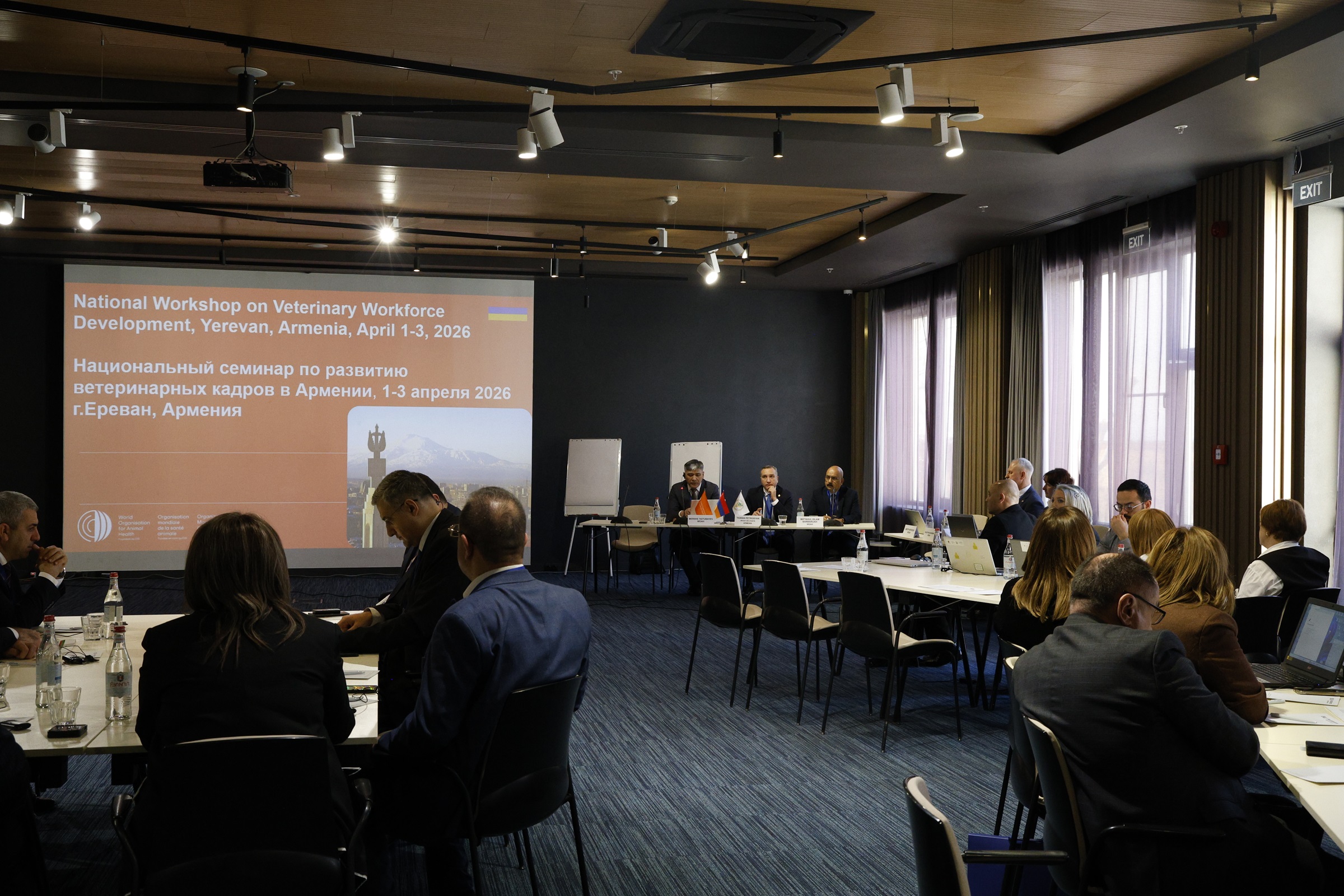
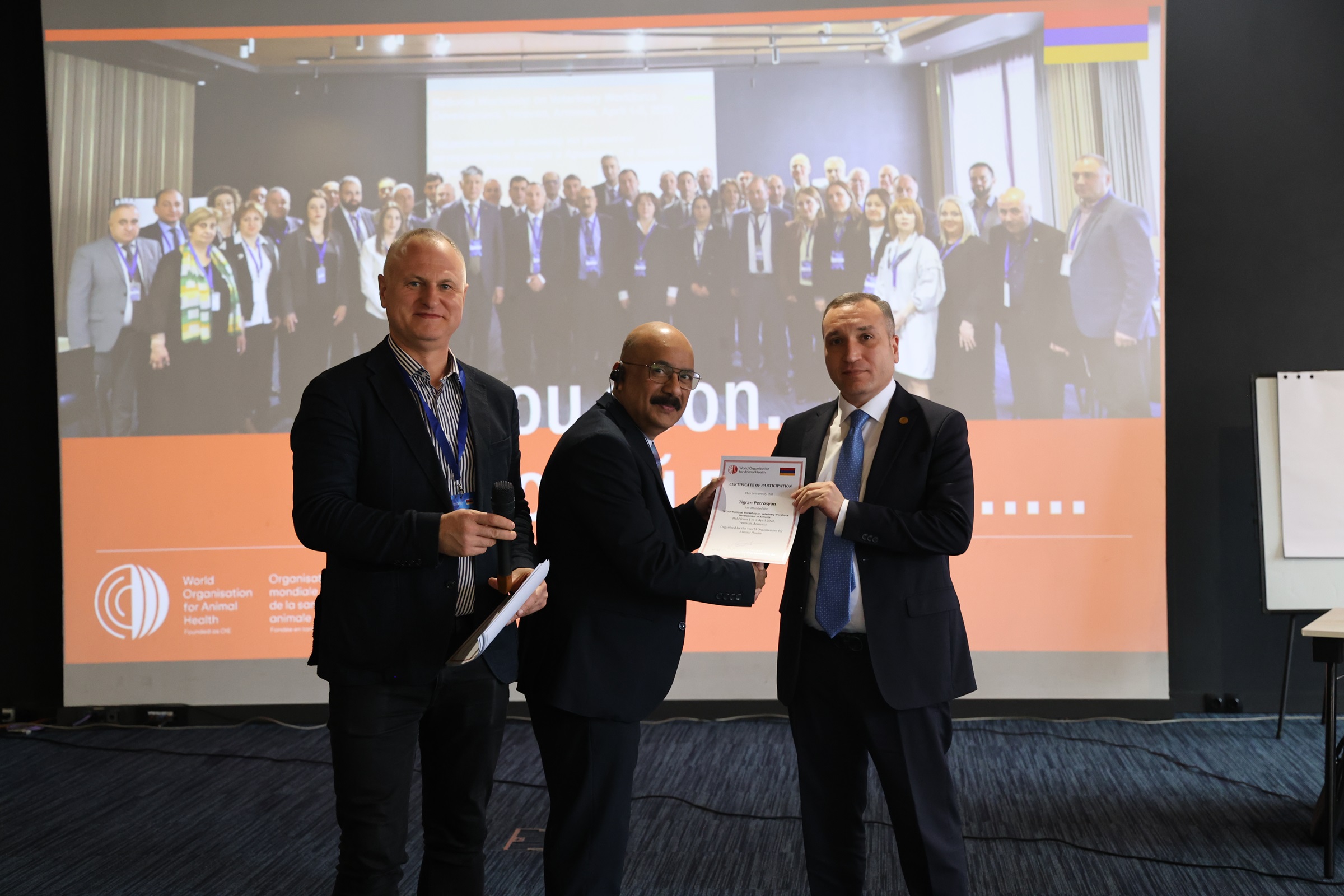
The National Workshop on Veterinary Workforce Development (WFD) was held in Yerevan, Armenia, from 1 to 3 April 2026, at the request of the Armenian WOAH Delegate, following Armenia’s participation in the sub-regional workshop on veterinary workforce development for Central Asian and Caucasus countries organised in Almaty in 2023.
The workshop aimed to support Armenia in strengthening the performance and sustainability of its Veterinary Services through a system-level approach to workforce development, linking workforce capacity (numbers, competencies, distribution, and performance) with key enabling environment components such as governance, legislation, regulation, education, and workforce data systems.
Objectives and scope
The specific objectives of the workshop were to:
Participation and approach
A total of 65 participants attended the face-to-face workshop, representing a broad range of stakeholders, including the State Veterinary Authority, relevant ministries, national laboratories, academia, veterinary and veterinary paraprofessional (VPP) training institutions, professional associations, students, and international partners.
The workshop followed a highly participatory format, combining plenary presentations, interactive polls, case-based exercises, and structured group discussions. This approach facilitated open dialogue among stakeholders and supported the development of a shared understanding of workforce-related challenges and opportunities in Armenia.
Key discussions and outcomes
Discussions throughout the workshop highlighted veterinary workforce development as a critical system-level enabler of Veterinary Services performance. Participants explored the interdependence between workforce capacity (numbers, competencies, skills, and motivation) and enabling environment elements, including governance arrangements, professional regulation, education and training systems, and data availability.
Particular emphasis was placed on clarifying the respective roles and responsibilities of public and private actors in delivering veterinary services. Participants discussed the importance of clearly defining public and private good functions, strengthening delegation mechanisms, and improving workforce planning to achieve an optimal balance between the public and private sectors, especially in rural and underserved areas.
For many participants, this was the first structured exposure to concepts such as workforce optimisation, surge workforce planning during emergencies, and the application of systematic methodologies for workforce assessment and planning. Case-based exercises illustrated how existing workforce capacity could be more effectively mobilised during disease outbreaks through improved coordination, legal provisions, and partnerships.
Veterinary legislation and regulation emerged as a key enabling factor for workforce development. Participatory sessions allowed stakeholders to reflect on the current regulatory framework in Armenia, including the role of professional associations and the potential establishment of a Veterinary Statutory Body (VSB). Discussions highlighted how strengthened regulation could support professional standards, facilitate greater involvement of private veterinarians and VPPs in public service delivery, enable team-based approaches in remote areas, and improve workforce protection and occupational safety.
Education and training were identified as priority areas for further harmonisation and strategic planning. While recognising existing strengths in veterinary and VPP education, participants noted gaps related to labour market alignment, continuing professional development, and consistency across training institutions. The introduction of WOAH Competency and Curriculum Guidelines for veterinary graduates and VPPs and the WOAH training platform was well received and recognised as a valuable benchmark for both initial education and continuing professional development, adapted to national priorities.
The workshop also raised awareness of workforce-related data gaps and the challenges associated with collecting, managing, and using data for evidence-based planning. Participants agreed on the need for more systematic and sustainable approaches to workforce data collection and analysis to support long-term policy decisions.
On the final day, participants consolidated the outcomes of the previous sessions and identified national priorities for veterinary workforce development. A preliminary outline for a national workforce development roadmap was drafted, and initial next steps were agreed upon, including the need for continued stakeholder coordination and the establishment of a working group to advance the workforce development agenda.
From the WOAH perspective, the workshop also provided valuable lessons on agenda design, facilitation methods, and participant engagement, which will inform the organisation of future national and regional workforce development activities.
WOAH will:
The workshop represents an important step in Armenia’s ongoing efforts to strengthen its Veterinary Services through a structured, inclusive, and sustainable approach to veterinary workforce development.