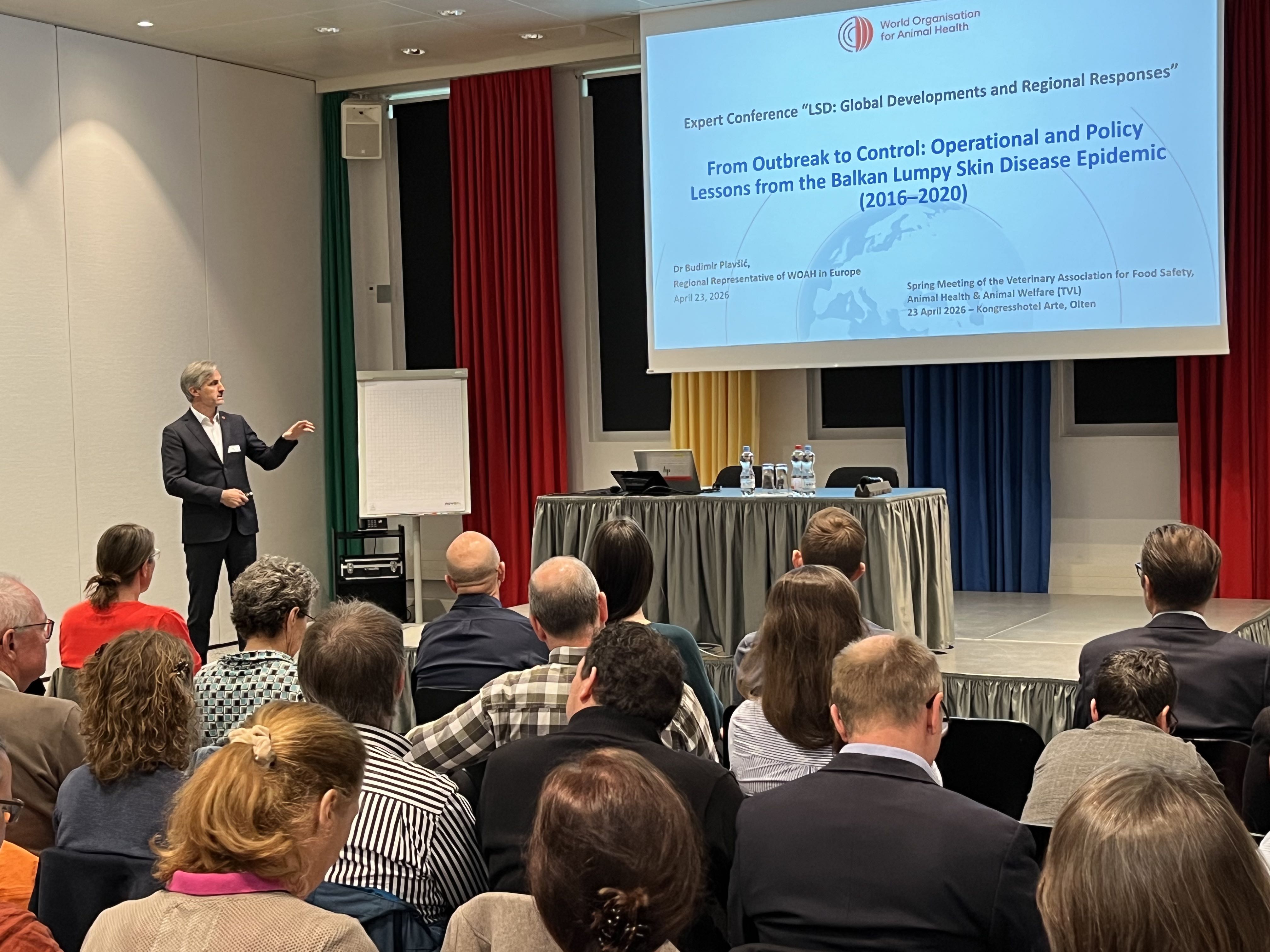
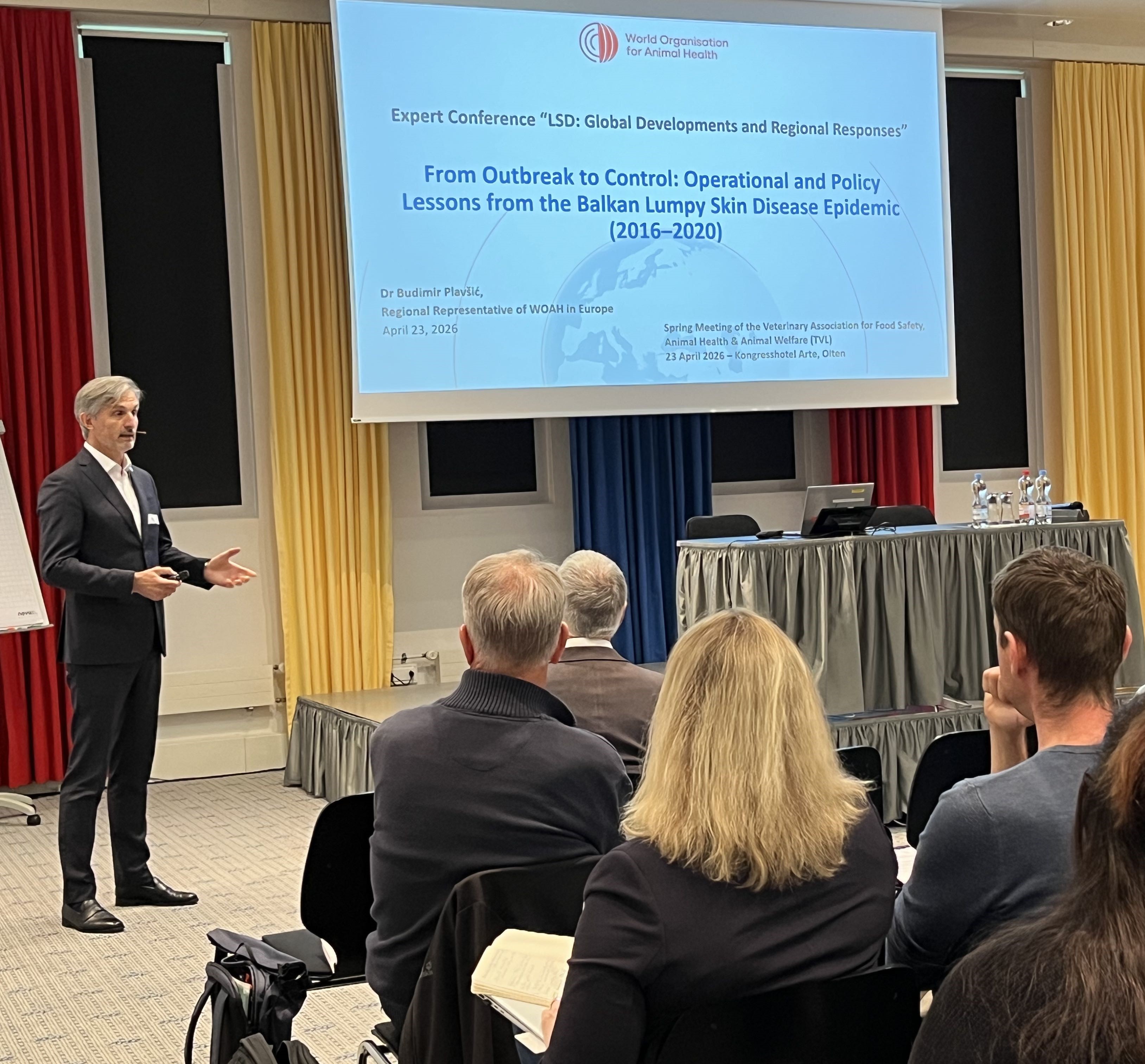
Drawing on direct operational experience and regional coordination under the GF-TADs framework, the presentation highlighted how countries in the Balkans successfully contained and ultimately eliminated the disease.
A key message was clear: large-scale, coordinated vaccination was the turning point. As vaccination coverage increased across the region – reaching more than 90% of the susceptible population—the number of outbreaks rapidly declined and transmission was eventually stopped.
The experience also demonstrated that no country can manage such a transboundary disease alone. Strong collaboration between national veterinary services, supported by WOAH, FAO, and the European Commission, ensured alignment of strategies, sharing of information, and effective implementation of control measures.
Over time, these lessons were consolidated through the GF-TADs Standing Group of Experts on LSD, resulting in a set of practical recommendations that continue to guide countries today. These include acting early, ensuring high vaccination coverage, maintaining strong surveillance systems, and coordinating actions at regional level.
Today, while LSD remains a risk in parts of Europe and neighbouring regions, the Balkan experience provides a clear and evidence-based pathway for effective control.
In simple terms: when vaccination is applied early, at scale, and in coordination, the disease can be stopped and eliminated.