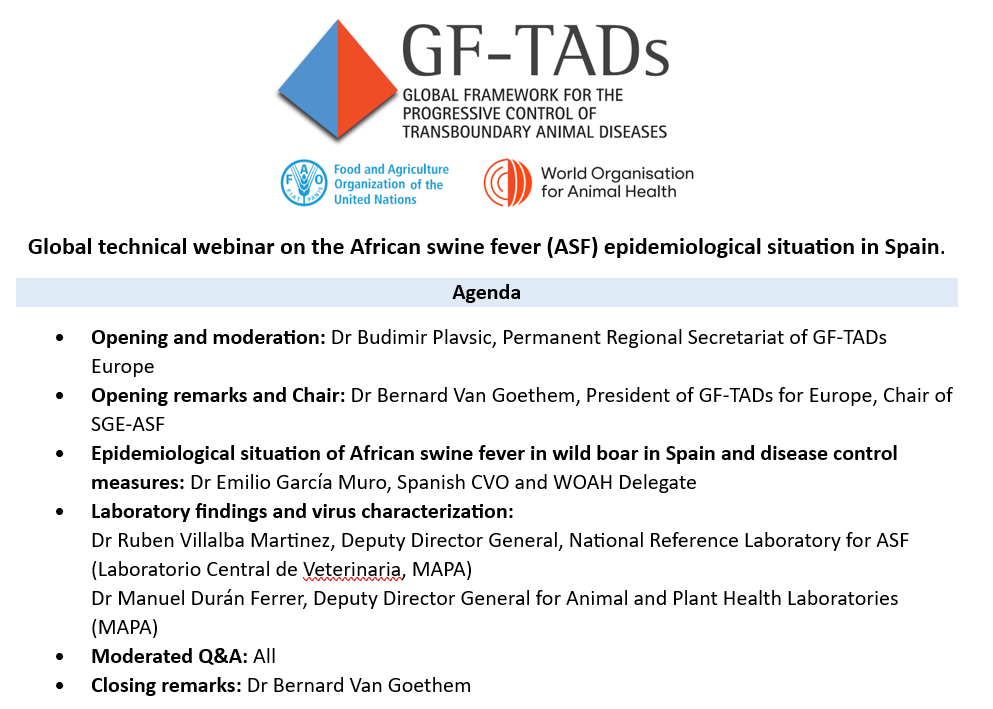
A global technical webinar organised under the framework of GF-TADs for Europe, in cooperation with the Veterinary Authority of Spain, brought together Members and partners to review the recent detection of African swine fever (ASF) in wild boar in Spain, the measures implemented to contain the disease, and the laboratory investigations supporting the response.
The webinar, hosted by Dr Budimir Plavsic (GF-TADs-Europe Secretariat) and chaired by Dr Bernard Van Goethem (President of GF-TADs for Europe), gathered more than 250 participants. It provided a comprehensive overview of epidemiology, control and surveillance measures, laboratory diagnosis, virus characterisation and international cooperation. The webinar highlighted Spain’s rapid and coordinated response to the first ASF detection since eradication in 1994.
Dr Emilio García Muro, the WOAH Delegate and Chief Veterinary Officer of Spain, Dr Rubén Villalba Martínez, the Deputy Director of the National Reference Laboratory for ASF, and Dr Manuel Durán Ferrer, the Deputy Director General for Animal and Plant Health Laboratories, Spanish authorities presented the epidemiological situation, laboratory findings and virus characterization, and responded transparently to numerous questions from participants, providing additional context on the management of the outbreak and ongoing vigilance.
In his opening remarks, Dr Bernard Van Goethem, President of GF-TADs for Europe, recalled that the GF-TADs framework was created precisely to promote transparency and timely information sharing, particularly in situations such as the current African swine fever outbreak. He noted that the detection of ASF in Spain in November 2025 was the first since 1994 and that, to date, the outbreak has remained confined to wild boar.
Dr Van Goethem underlined the rapid notification and high level of transparency demonstrated by the Spanish authorities, as well as the continuous exchange of information with partners and experts through GF-TADs. He highlighted that recent veterinary expert missions confirmed the response to be timely, well coordinated and professionally implemented, while stressing the need for continued vigilance.
He also emphasized the importance of reference laboratories, whole genome sequencing and international data sharing in understanding ASF epidemiology, noting that the experience shared by Spain contributes to the collective knowledge and preparedness of Members in the Europe region and beyond.
Spain confirmed the presence of ASF virus in wild boar in November 2025, marking the first detection in the country in more than three decades. Importantly, the disease has been strictly confined to wild boar, with no cases detected in domestic pigs, demonstrating the effectiveness of national surveillance and biosecurity systems.
The first detections occurred on 25–26 November 2025, when two wild boar carcasses were found approximately one kilometre apart in the municipality of Cerdanyola del Vallès (Barcelona province), near the campus of the Autonomous University of Barcelona. The carcasses were in fresh condition and located in an urban–forest interface area with dense vegetation, a permanent wild boar population, and access to unsecured waste.
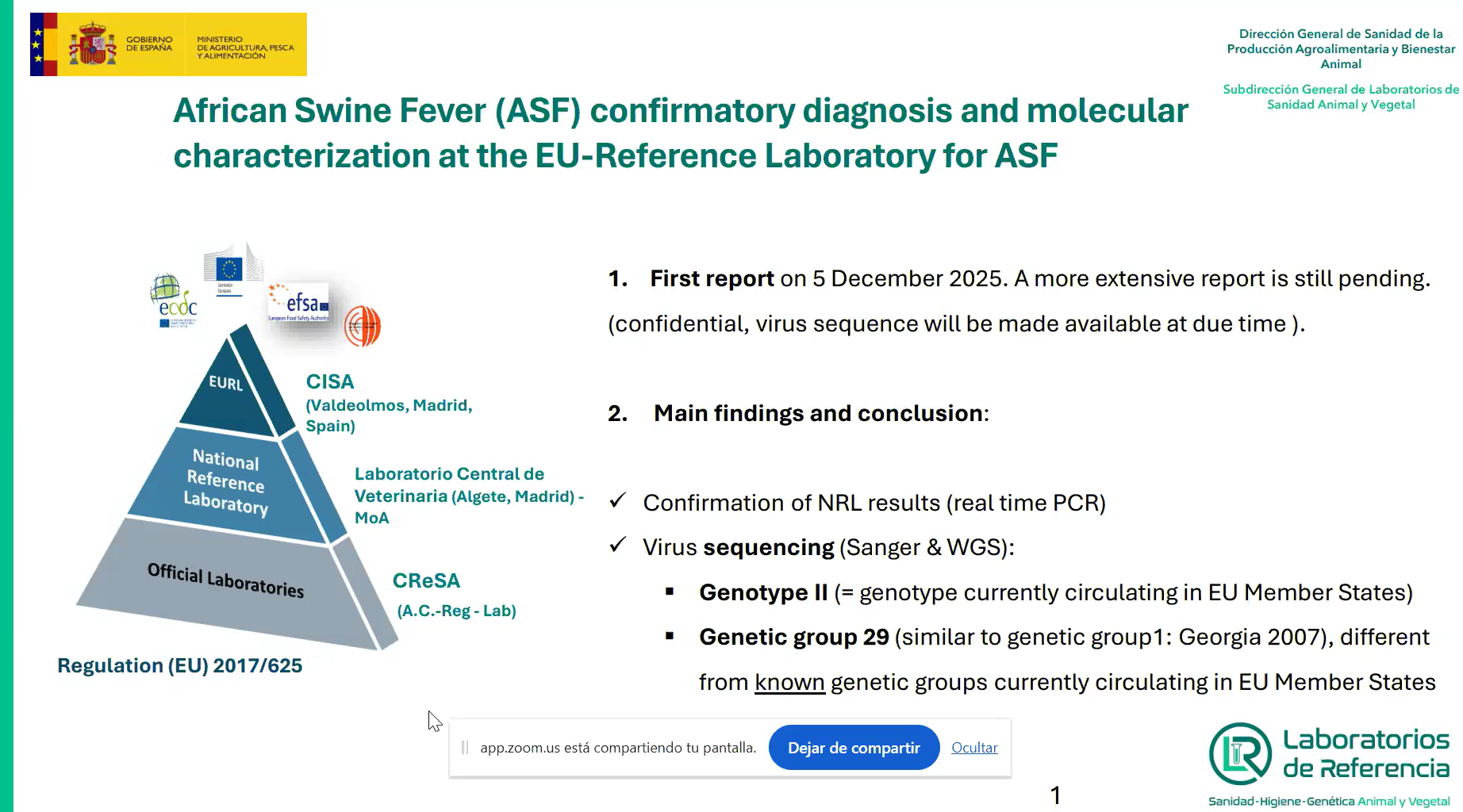
Samples analysed by the official regional laboratory IRTA-CReSA and confirmed by the National Reference Laboratory (NRL) in Algete tested positive for ASF virus by PCR. Necropsy findings revealed lesions fully consistent with ASF, and sequencing confirmed genotype II of the virus.
Following confirmation, Spanish Veterinary authorities immediately launched an intensive active search for wild boar carcasses to assess the extent of the outbreak. By 19 December 2025, a total of 193 carcasses had been detected and tested: 27 wild boar tested positive, grouped into 10 epidemiological outbreaks; and 166 wild boar tested negative.
Almost all positive cases were located within a defined core area, with one case detected outside the fenced core but still within the 6 km high-risk zone. The affected area is characterised by moderate wild boar density, surrounding urban and residential neighbourhoods, major road infrastructures, and a low density of pig farms.
An Infected Zone (IZ) with a 20 km radius was established covering 95 municipalities in total, and subdivided into a core zone, a high-risk zone (0–6 km), and a lower-risk zone (6–20 km).
Control measures focused on preventing the spread of the virus through wild boar movements and limiting human-mediated risks. These included:
A protocol-driven carcass search strategy was implemented using trained field teams, canine units, drones, and helicopter surveillance. The response involved extensive inter-agency cooperation, including rural agents, environmental authorities, police forces, civil protection services, the military emergency unit, and trained hunters.
Strict cleaning and disinfection procedures were applied to vehicles, equipment, and trained dogs exiting the infected zone.
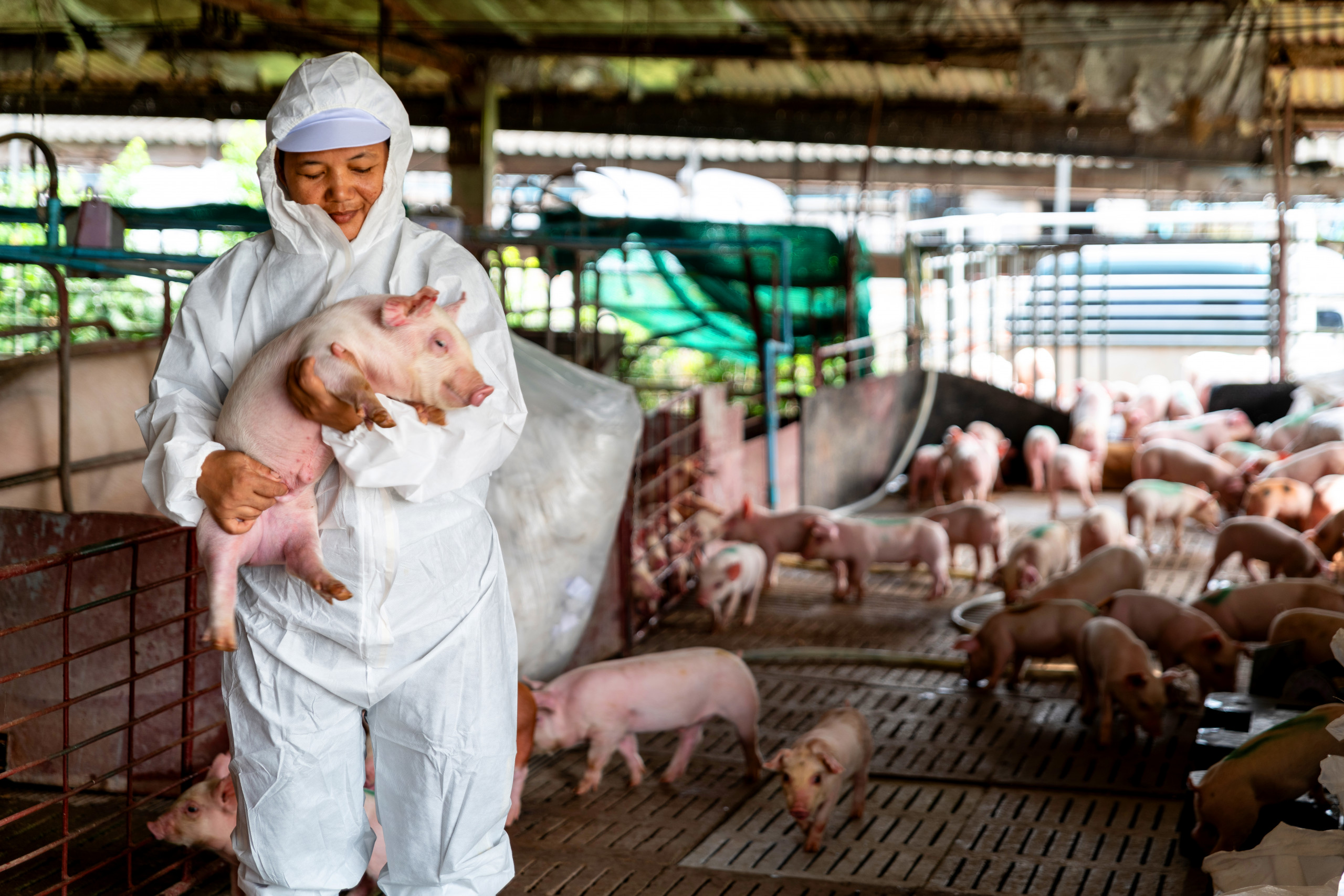
Preventive measures on pig holdings were rapidly reinforced, including:
All 57 commercial pig farms located within the infected zone were visited, and no clinical signs or lesions compatible with ASF were detected. All laboratory tests carried out in domestic pigs returned negative results, confirming that Spain’s pig population remains free from the disease.
Laboratory investigations were key to the rapid confirmation and risk assessment of the outbreak. Spain’s official animal health laboratory network, coordinated by the NRL for ASF at the Laboratorio Central de Veterinaria (LCV, Algete), ensured timely diagnosis using fully accredited screening and confirmatory methods.
Following the initial suspicious on 26 November 2025., PCR confirmation at the NRL was obtained the 27 November within hours of sample reception. Diagnostic activities included: real-time PCR testing; partial genome sequencing (p72, p54 and CVR genes); virus isolation in primary monocyte cultures; serological testing, which explained negative results in some early-stage infections.
All confirmed cases belonged to ASF virus genotype II. Sequencing identified a shared single nucleotide polymorphism (SNP) in the p54 gene across all Catalonian outbreaks, indicating a common viral source.
Close cooperation was immediately established with the EU Reference Laboratory (EURL) for ASF, which confirmed the NRL results and performed Whole Genome Sequencing (WGS). The virus was classified as genotype II, genetic group 29, related to the Georgia 2007 strain but distinct from ASF known strains currently circulating in EU Member States.
Although detailed genetic characterisation was achieved, the analyses did not allow identification of the virus origin, due to the lack of closely related sequences in existing databases. Specific genetic markers were nevertheless identified, supporting future traceability efforts.
Given the unusual genetic profile and the proximity of a biosafety level 3 laboratory to the first outbreak area, Spain initiated a complementary epidemiological investigation in line with Regulation (EU) 2016/429 (Animal Health Law) and requested technical assistance from the European Commission.
An EUVET mission of laboratory experts visited Catalonia on 11–12 December 2025, reviewing biosafety systems, virus inventories, personnel authorisation procedures, and records of laboratory activities. The EUVET team concluded that:
The experts recommended continued sequencing of detected viruses and further sequencing of relevant strains held in reference facilities.
During the discussion, Spanish colleagues addressed a wide range of questions from participants, providing additional technical clarifications on the outbreak situation, laboratory findings, control measures and next steps.
Regarding virus characterisation, it was recalled that sequencing confirmed the African swine fever virus as genotype II, genetically related to the Georgia 2007 strain, but with specific variations distinguishing it from ASF viruses currently circulating in Europe. Whole genome sequencing has already been completed by the EU Reference Laboratory, although the sequence remains confidential and will be made publicly available at an appropriate stage.
Participants were also informed about the visit of EU laboratory experts in mid-December, which focused on reviewing laboratory biosafety systems, virus inventories and operational procedures, with the objective of exploring possible hypotheses regarding the origin of the virus. Based on the information reviewed, the experts were unable to identify any obvious route of virus escape or release from laboratory facilities. Continued sequencing and broader genetic characterisation were highlighted as important elements for strengthening future epidemiological understanding.
With regard to the epidemiological situation, it was explained that the outbreak remains highly localised in wild boar, with an estimated population of around 150 animals in the core area within the 20 km infected zone. Strict movement restrictions are in place for pig farms within this area, and no cases have been detected in domestic pigs to date.
On the economic aspects, it was acknowledged that prices for fattening pigs have declined compared with the previous year, while noting that the overall economic impact remains difficult to assess at this stage, given the limited geographical extent of the outbreak and its confinement to wildlife.
The discussion also addressed wild boar population management, which was recognised as a key component of disease prevention and long-term health improvement. Beyond technical measures, the importance of public awareness, education and local regulatory measures was emphasised, particularly in urban and peri-urban areas where human activities may contribute to wild boar aggregation. It was also noted that the slaughterhouse located within the restricted zone is currently closed to external movements, and that any future processing of animals from farms in the area would need to be carried out under controlled conditions and strict veterinary supervision.
In terms of control measures, it was clarified that financial compensation for carcass search activities is not foreseen, while targeted incentives for hunters are being used in areas with high wild boar density as part of emergency population reduction efforts. It was also confirmed that ropes are not used for oral fluid sampling in ASF surveillance. Participants were reminded that the measures applied are consistent with GF-TADs recommendations, reflecting a level of preparedness that has significantly improved over recent years.
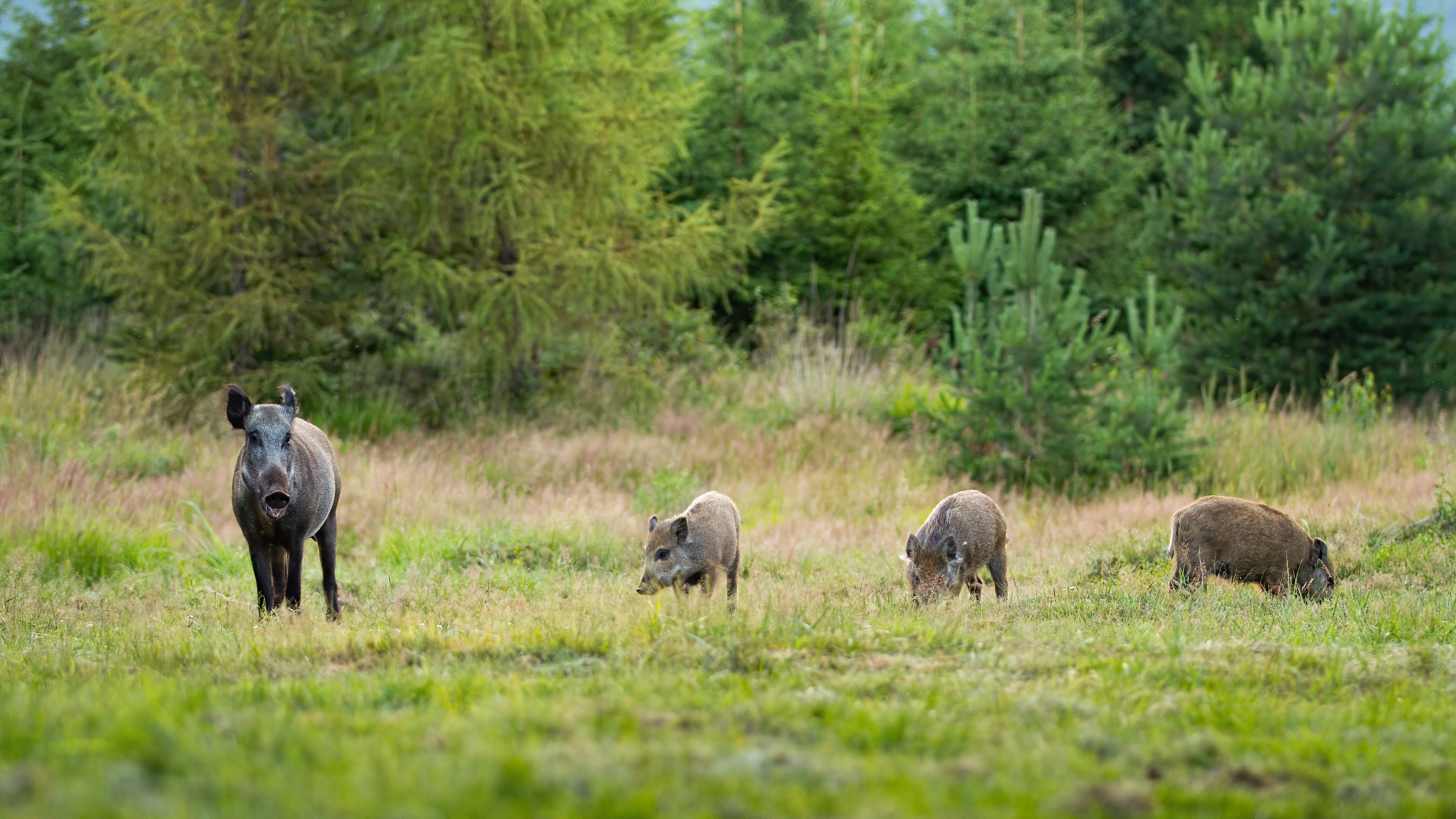
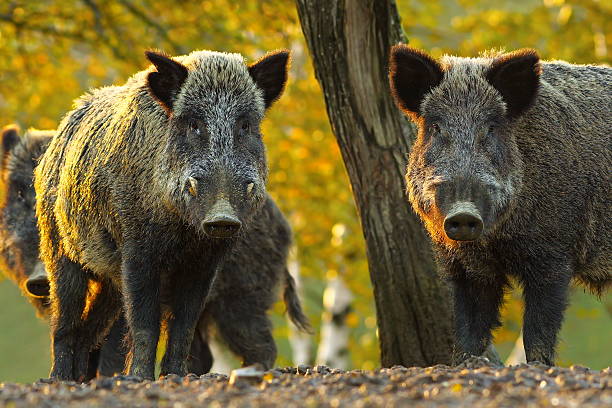
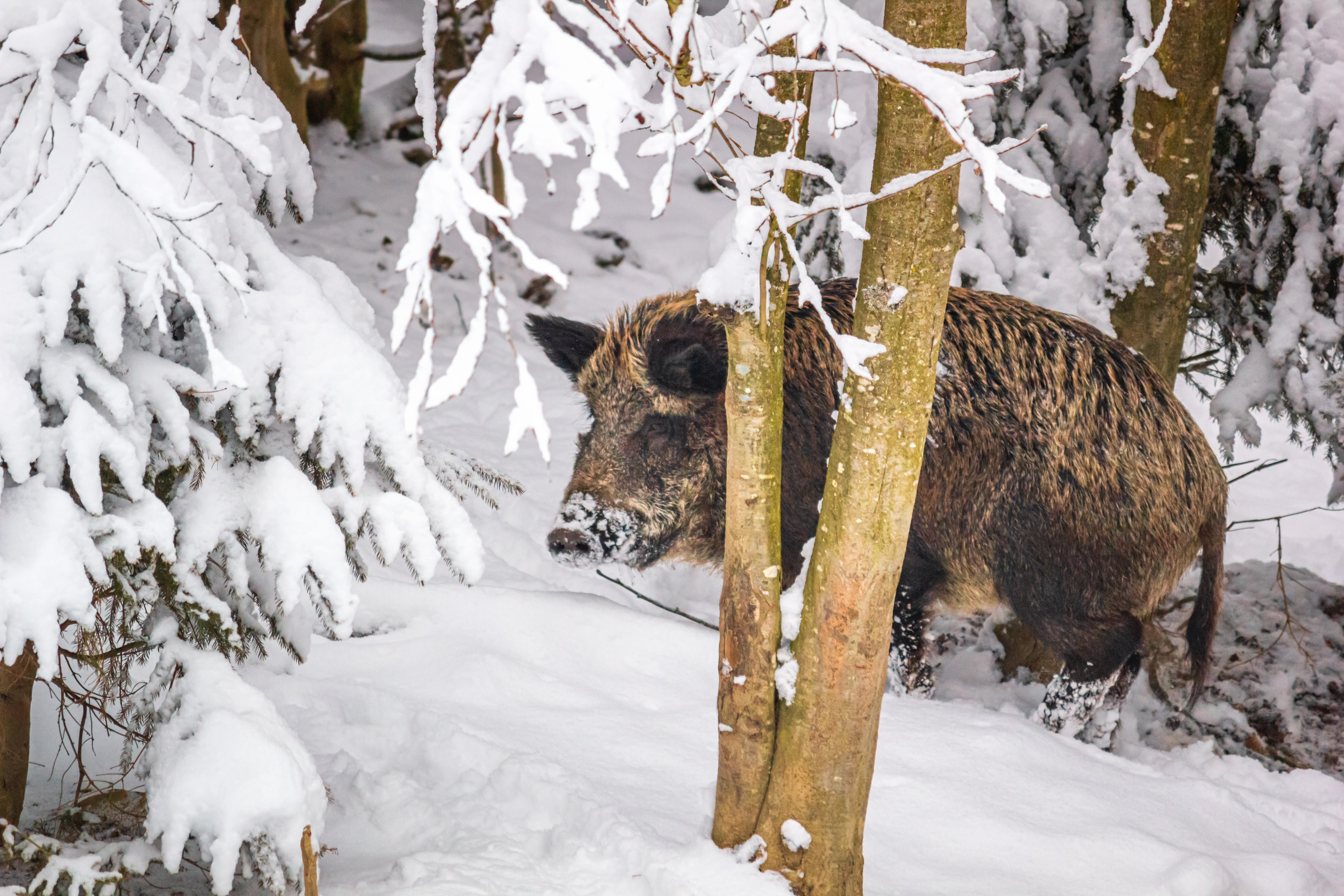
Wild boar (Sus scrofa) in the winter mountain forest after snowfall, selective focus
Looking ahead, Spanish colleagues outlined a number of ongoing and anticipated areas of work, aimed at maintaining vigilance and supporting informed decision-making as the situation evolves. These include continued genetic analysis of detected viruses to better understand their relationships, broader sequencing efforts to strengthen traceability, sustained communication with international partners on proportionate trade measures, and continued surveillance in and around the infected zone.
Further attention will also be given to monitoring wild boar populations, progressively adjusting capture and population management approaches in lower-risk areas, maintaining emergency measures in high-density regions, and ensuring that any necessary interventions in pig holdings are carried out humanely and under appropriate veterinary control. Regular information sharing with stakeholders and international partners will remain an essential component of the response.
The exchanges during the discussion complemented the technical presentations by providing additional context on laboratory findings, field implementation and ongoing management considerations. Together, the presentations and discussion offered a coherent picture of the current ASF situation in Spain, the rationale behind the measures applied, and the principles guiding continued vigilance and adaptation of the response.
Overall, the experience shared during the webinar demonstrated that preparedness, scientific capacity and clear communication are decisive in responding to ASF incursions. The lessons drawn from Spain’s experience provide valuable insights for Members and partners, reinforcing the importance of vigilance, cooperation and adaptability in addressing ASF and other transboundary animal diseases.