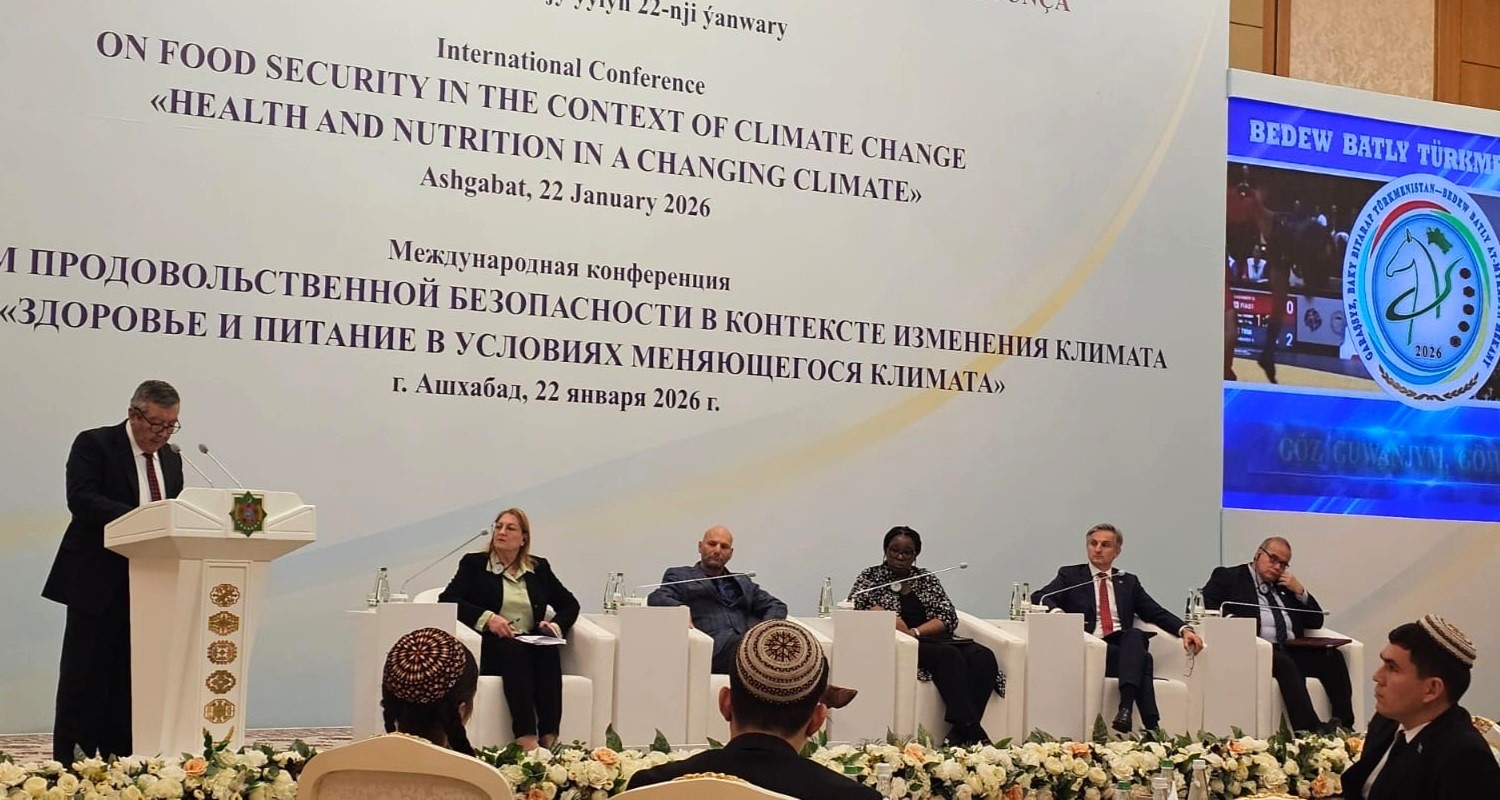
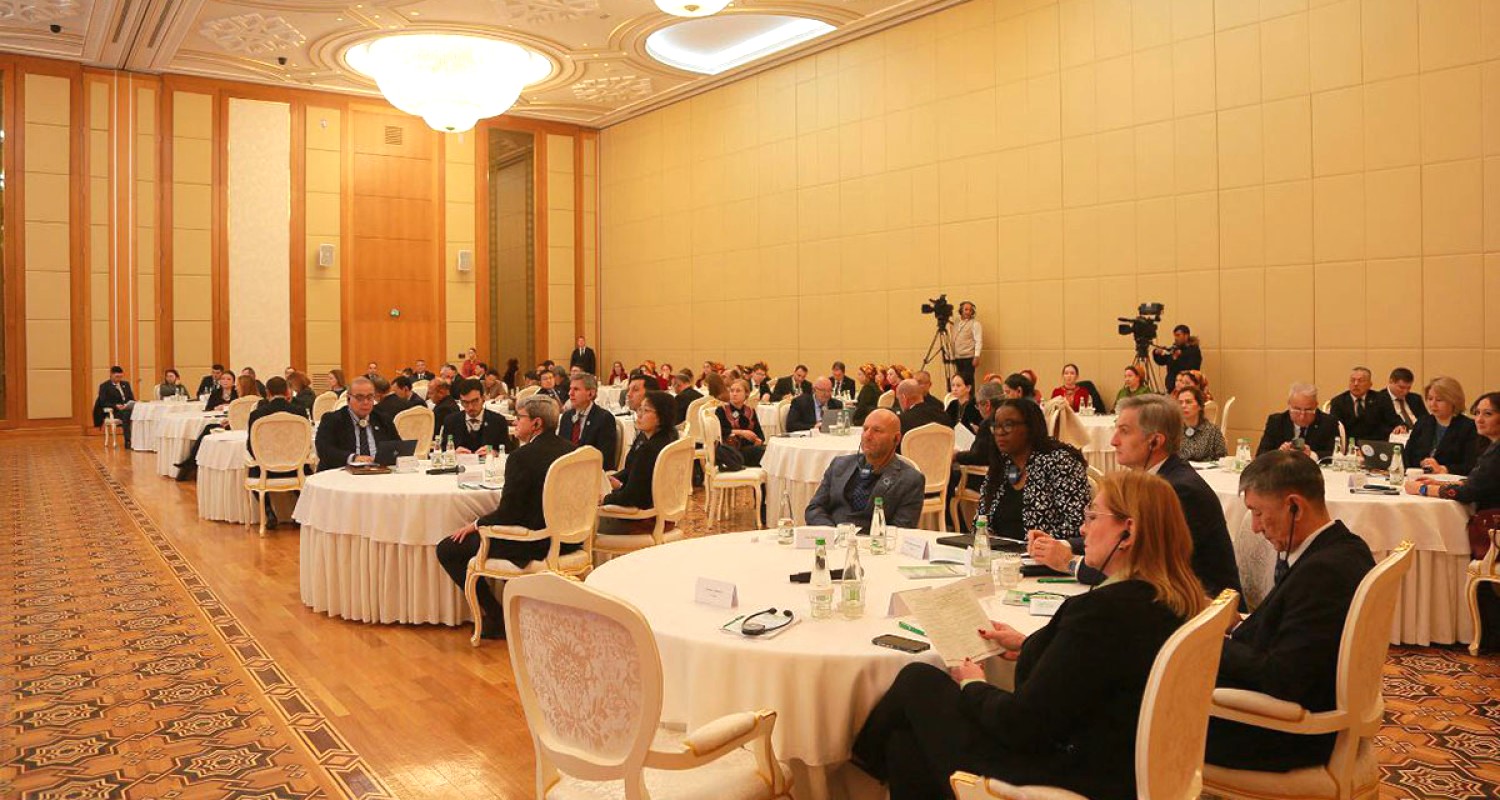
The International Conference on Food Security in the Context of Climate Change, titled “Health and Nutrition in a Changing Climate,” took place in Ashgabat, Turkmenistan, on January 22, 2026, with Dr. Budimir Plavšić, WOAH Regional Representative for Europe, representing the organization and its 53 Member Countries.
On the Panel Session 1 “One Health as a Cornerstone for the Transformation of Agrifood Systems,” Dr. Plavšić highlighted that climate change is no longer a background factor but is already reshaping risks to animal health, food security, nutrition and livelihoods across the region. He stressed that One Health should therefore be understood not as an additional concept, but as a practical framework for delivering climate resilience across food systems, health and the environment.
Looking ahead to COP30 and beyond, he underlined two key messages:
On policy coherence, Dr. Plavšić acknowledged the effectiveness of the Regional One Health Coordination Mechanism in Europe, bringing together FAO, WHO, UNEP, and WOAH, as a useful institutional model for Member countries. He noted that the main challenge is not cooperation in principle but ensuring that collaboration leads to clear and timely decisions when risks affect multiple sectors simultaneously. Effective mechanisms include formal One Health governance with clear mandates, trigger-based cross-sectoral collaboration activated by defined risk thresholds, and the routine use of joint tools such as integrated surveillance, joint risk assessment and simulation exercises.
“Recent regional discussions confirmed that governance and decision-making gaps, rather than scientific capacity, remain the main barriers to effective One Health implementation,” Dr. Plavšić said.
Addressing the role of animal health systems, WOAH Regional Representative for Europe emphasised that veterinary services should be seen as preventive systems supporting public health, food security and environmental protection. Strong veterinary services help prevent the transfer of zoonotic diseases from animals to humans and reduce food-borne disease risks early in the food chain, thereby underpinning safe and trusted food systems. By preventing disease, ensuring animal welfare and reducing losses, they also contribute to healthier diets and livelihoods, particularly in rural and vulnerable communities. Working closely with informed farmers, veterinary services play a key role in early detection of zoonotic and pandemic risks at their source, preventing escalation to human populations where responses are far more complex and costly. In addition, good animal health practices reduce unnecessary antimicrobial use and environmental contamination, contributing to the fight against antimicrobial resistance.
In conclusion, Dr Plavšić noted that the question is no longer whether to adopt One Health, but how quickly and practically it can be integrated into climate, food and nutrition decision-making in ways that work under real pressure. Investing in prevention, strengthening veterinary and surveillance systems, and ensuring policy coherence across sectors were identified as key elements for translating One Health into real and measurable resilience for Member countries.