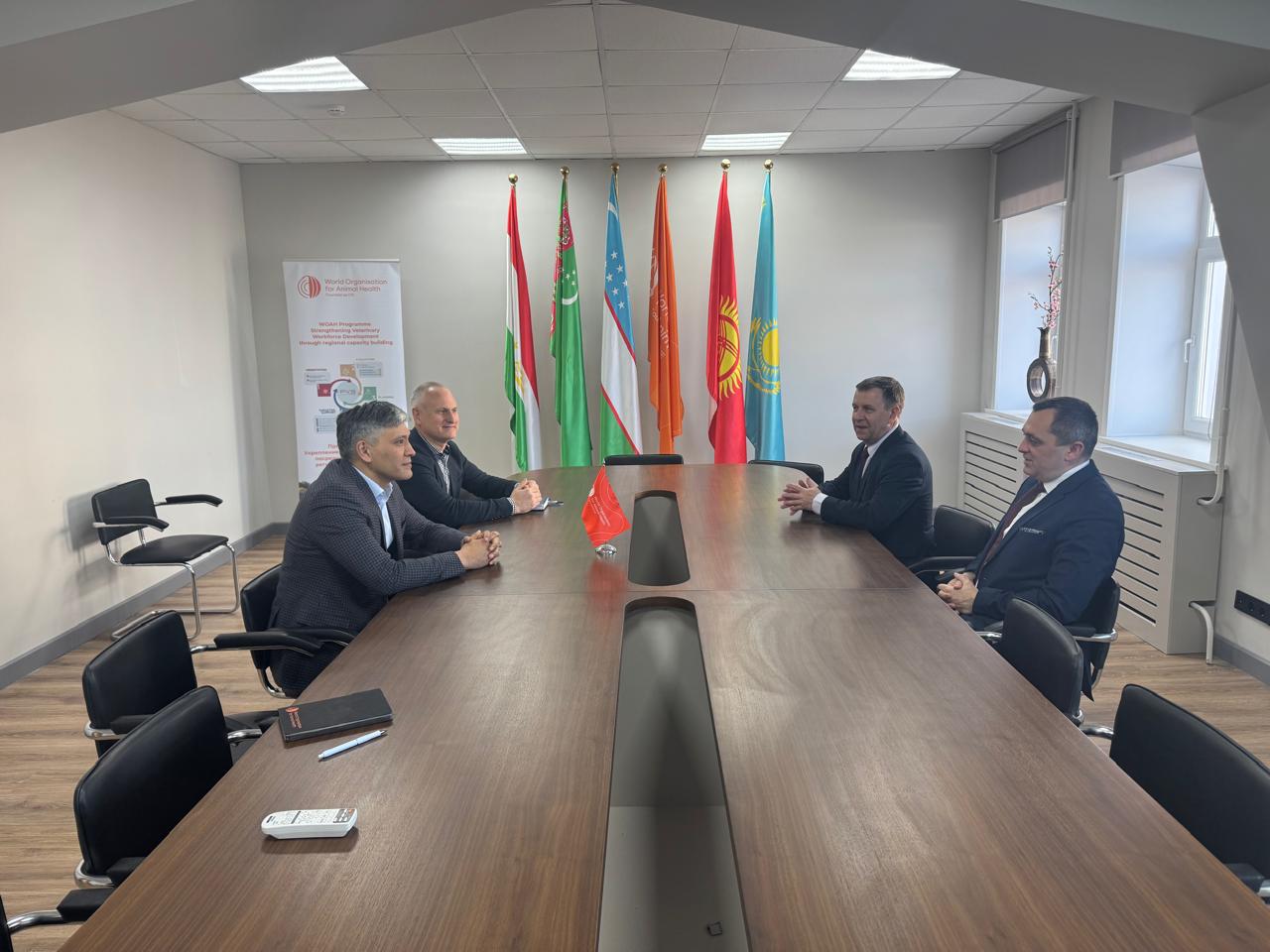
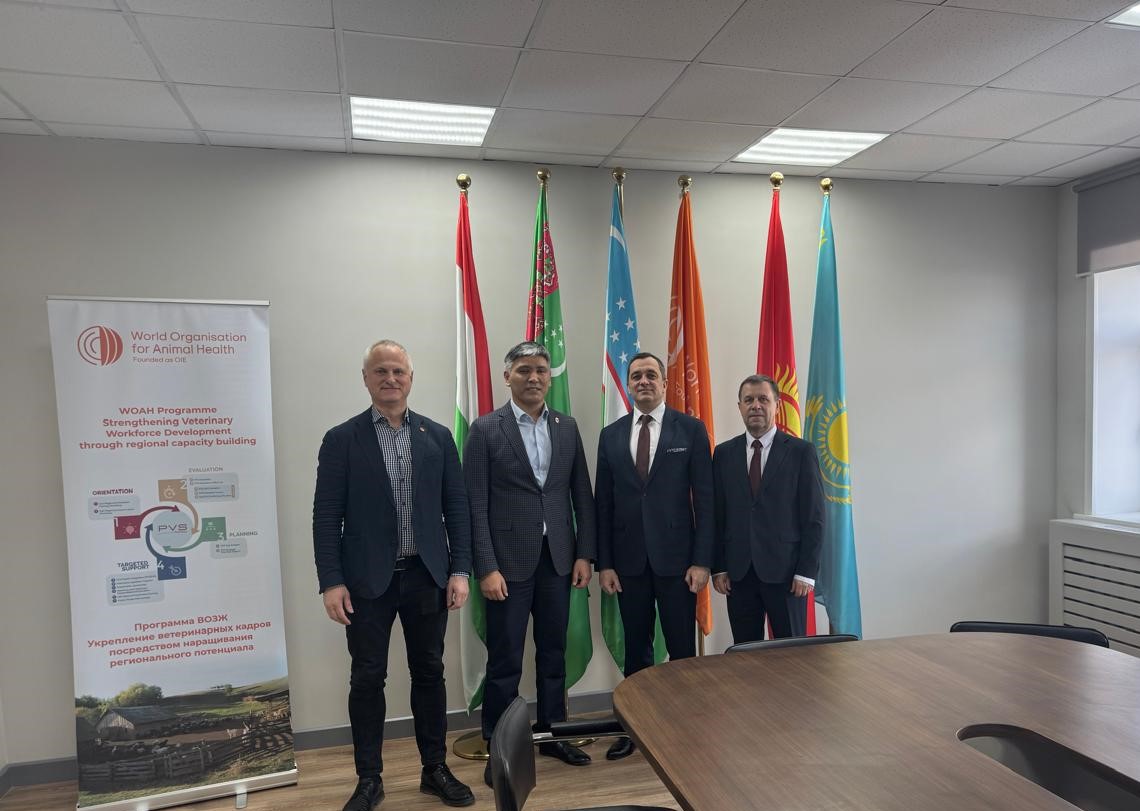
On 17 April, the WOAH Sub-Regional Representation for Central Asia (SRR CA) welcomed representatives of the Eurasian Economic Commission (EEC) to its office in Astana. The delegation included Alexander Subbotin, Member of the Board (Minister) in charge of Technical Regulation, and Vladimir Sinkevich, Director of the Department for Sanitary, Phytosanitary and Veterinary Measures.
The meeting provided an opportunity to exchange information on current activities and explore avenues for strengthened cooperation between WOAH and the EEC in areas of common interest, including animal health, veterinary services, and regional integration.
Regional activities and coordination under GF-TADs
The WOAH SRR CA presented an overview of WOAH activities implemented across Central Asia and the wider Europe region. Particular attention was given to the coordination arrangements under the GF-TADs initiative, whereby three WOAH offices in the Europe region have divided responsibilities to ensure effective coverage.
In this context, the SRR CA highlighted that the Astana office now coordinates GF-TADs activities related to foot-and-mouth disease (FMD), peste des petits ruminants (PPR), sheep and goat pox (SPGP), and lumpy skin disease (LSD) for all 53 countries of the WOAH Europe region, supporting regional preparedness, information exchange, and coordinated disease control efforts.
Veterinary workforce development and regulatory frameworks
The discussion also focused on the Regional Project on Strengthening Veterinary Workforce Development in Eastern Europe and Central Asia, currently implemented by the WOAH SRR CA. The project supports countries in improving veterinary workforce planning, regulation, education, and deployment through system-based approaches aligned with international standards.
EEC representatives expressed particular interest in the regulation of the veterinary profession through Veterinary Statutory Bodies (VSBs), which are being established or strengthened in several countries of the region. The WOAH team outlined how effective regulation of the veterinary profession contributes to professional standards, public trust, quality of services, and safe delegation of tasks within Veterinary Services.
In addition, the SRR CA presented ongoing activities to harmonise veterinary and veterinary paraprofessional education across the region. These efforts include the introduction of the One Health concept into curricula and the strengthening of key competencies such as risk analysis, epidemiology, international trade, and State Veterinary Services, in line with WOAH Competency and Curriculum Guidelines.
Tools, standards, and future cooperation
The WOAH team also introduced international standards and capacity-building tools related to veterinary workforce development, including Veterinary Legislation Support Programme (VLSP) missions, VSB expert missions, and curriculum support missions. Particular attention was given to the newly developed Veterinary Workforce Assessment Tool (VWAT), which is planned for piloting in selected countries across Europe, Africa, and Asia.
The VWAT is designed to provide Members with a rapid, practical means of estimating workforce requirements without the need for the detailed datasets required for the bottom-up workforce assessment process within the PVS Pathway. At the same time, the tool allows countries with more comprehensive data to generate refined workforce estimates. The EEC indicated its willingness to support the piloting of this tool within the region.
Institutional context and next steps
The meeting also highlighted the mandate of the EEC and its Department for Sanitary, Phytosanitary and Veterinary Measures, which plays a key role in coordinating policies within the Eurasian Economic Union related to sanitary and epidemiological welfare, veterinary and phytosanitary safety, technical regulation, and consumer protection.
Both sides acknowledged the strong alignment between WOAH’s standard-setting and capacity-building mandate and the EEC’s regulatory and coordination functions.
The meeting concluded with a shared understanding of the value of continued dialogue and technical cooperation in strengthening animal health systems, supporting regional harmonisation, and enhancing veterinary and sanitary safety across the Eurasian Economic Union.