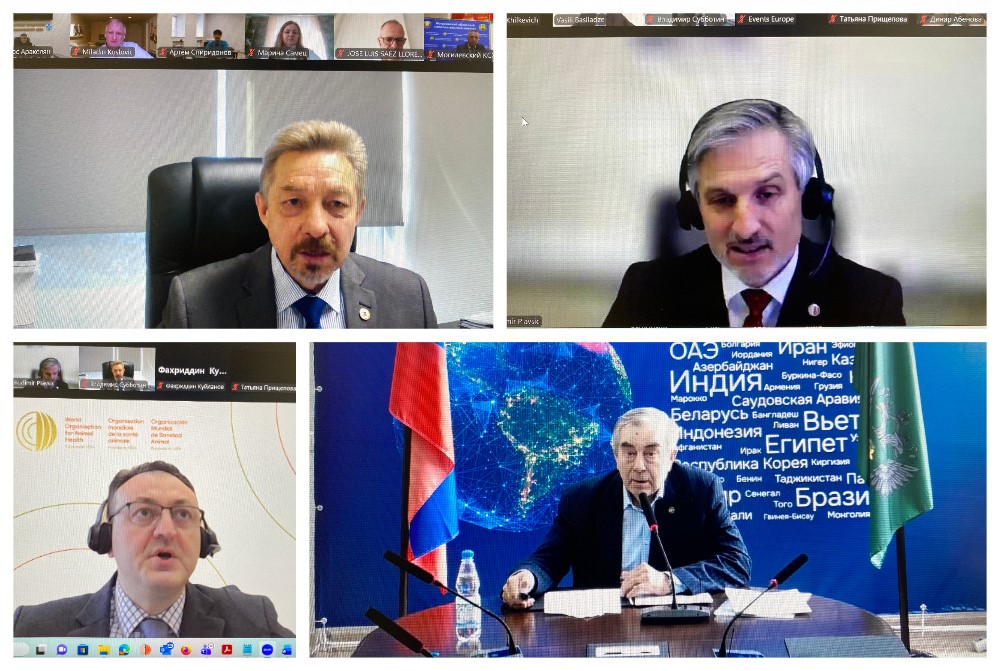
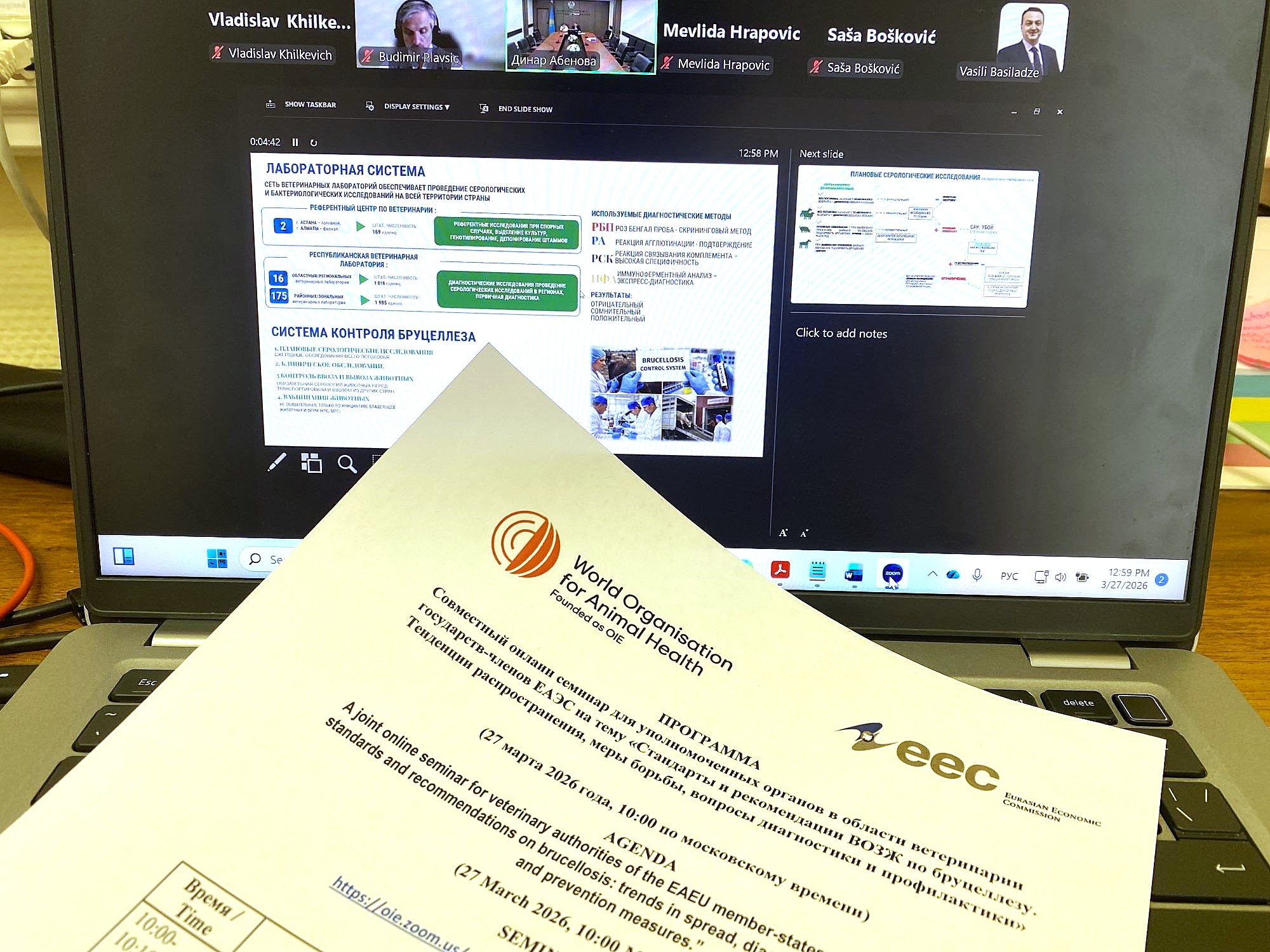
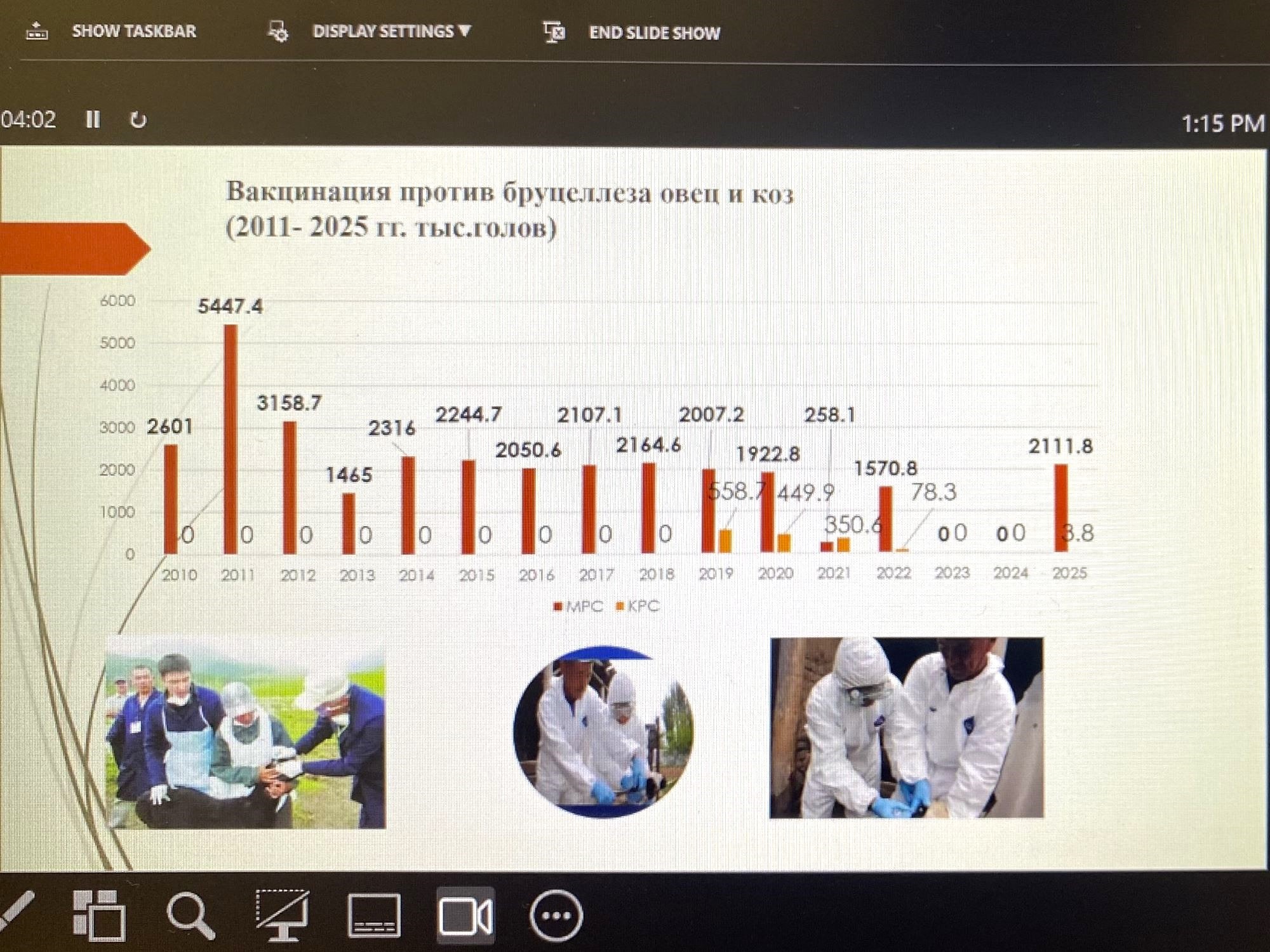
The webinar brought together more than 280 participants, including representatives of veterinary authorities from the Member States of the Eurasian Economic Union (EAEU), namely the Republic of Armenia, the Republic of Belarus, the Republic of Kazakhstan, the Kyrgyz Republic and the Russian Federation, other countries which shared their experience, international experts, and partner organisations. The high level of participation and engagement confirmed the strong interest in advancing coordinated approaches to the control and eradication of brucellosis.
Brucellosis remains one of the most significant zoonotic diseases, affecting animal health, public health and rural livelihoods. During the seminar, participants explored the disease from all relevant angles, including epidemiological trends, diagnostic methods, surveillance systems, vaccination strategies, and pathways towards disease-free status.
The event highlighted the importance of strong Veterinary Services, aligned with WOAH standards, and the need for effective One Health collaboration between animal health and public health sectors.
The seminar was structured to provide a complete perspective—from global standards and scientific expertise to practical country experiences.
Key presentations included:
PDF - 1.43MB
A key outcome of the seminar was the recognition that there is no single pathway to successful brucellosis control. Countries shared complementary approaches—ranging from vaccination-based strategies to surveillance-driven eradication programmes—demonstrating that effective control must be adapted to national contexts.
At the same time, all approaches converge towards a common objective: the progressive elimination of brucellosis and the achievement of disease-free status.
The seminar reaffirmed the strong partnership between WOAH and the EEC, built over more than a decade of collaboration. Both organisations were recognised as reliable partners, supporting Member Countries in strengthening their Veterinary Services, enhancing technical capacities, and promoting regional cooperation.
Through initiatives such as this seminar, WOAH and the EEC continue to support countries in developing robust, science-based, and coordinated strategies to prevent, control, and ultimately eradicate brucellosis.