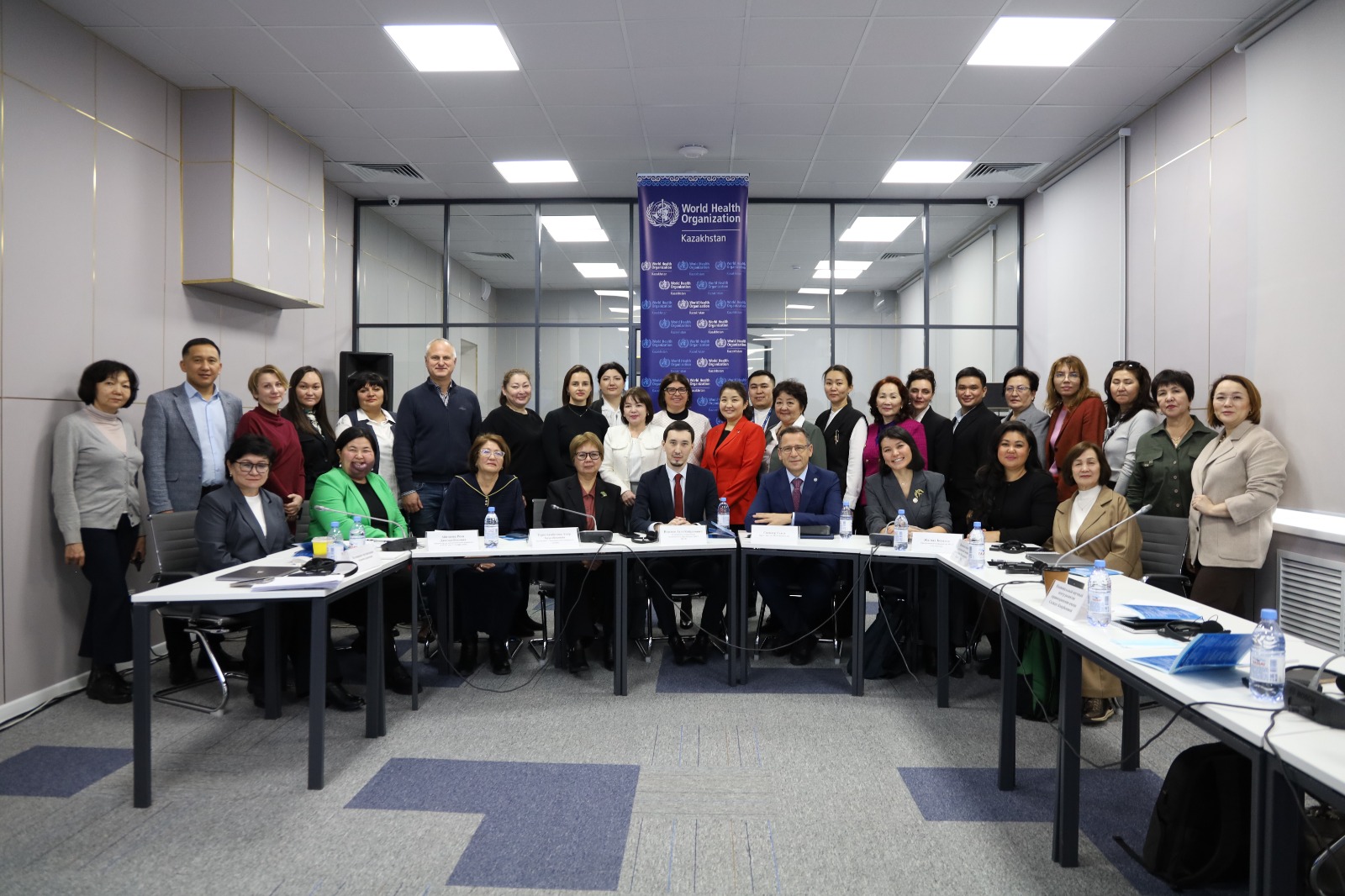
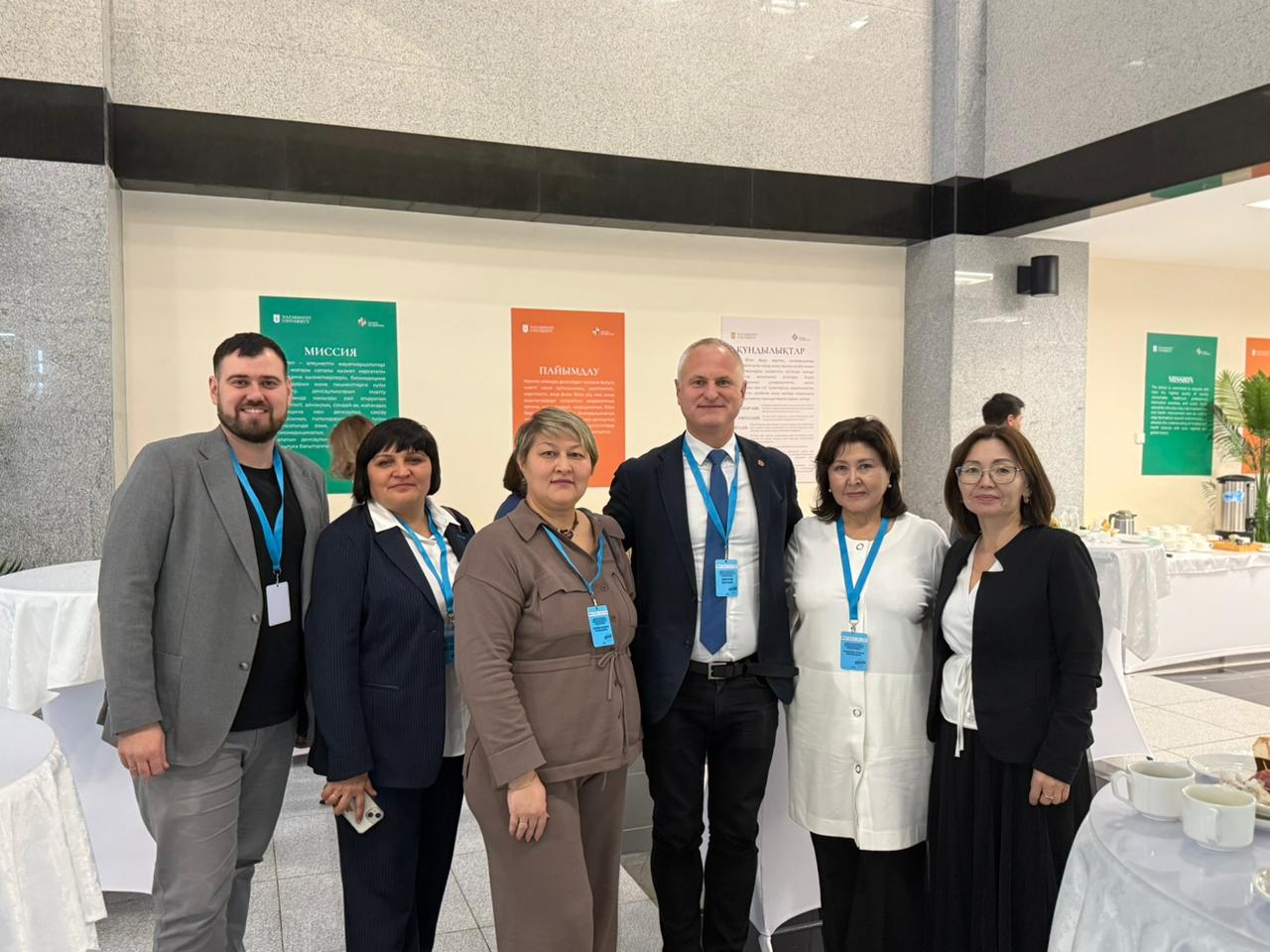
On 20–21 November 2025, a series of events dedicated to the World AMR Awareness Week (WAAW-2025) took place in Astana. The programme was jointly organised by the World Health Organization (WHO), the World Organisation for Animal Health (WOAH), the Food and Agriculture Organization of the United Nations (FAO), as well as the Ministry of Health and the Ministry of Agriculture of the Republic of Kazakhstan. The events brought together representatives of government authorities, educational and research institutions in the fields of medicine and veterinary sciences, as well as international experts.
The WOAH Sub-Regional Representation for Central Asia actively participated in both days of the event, highlighting the importance of the One Health multisectoral approach in addressing antimicrobial resistance (AMR).
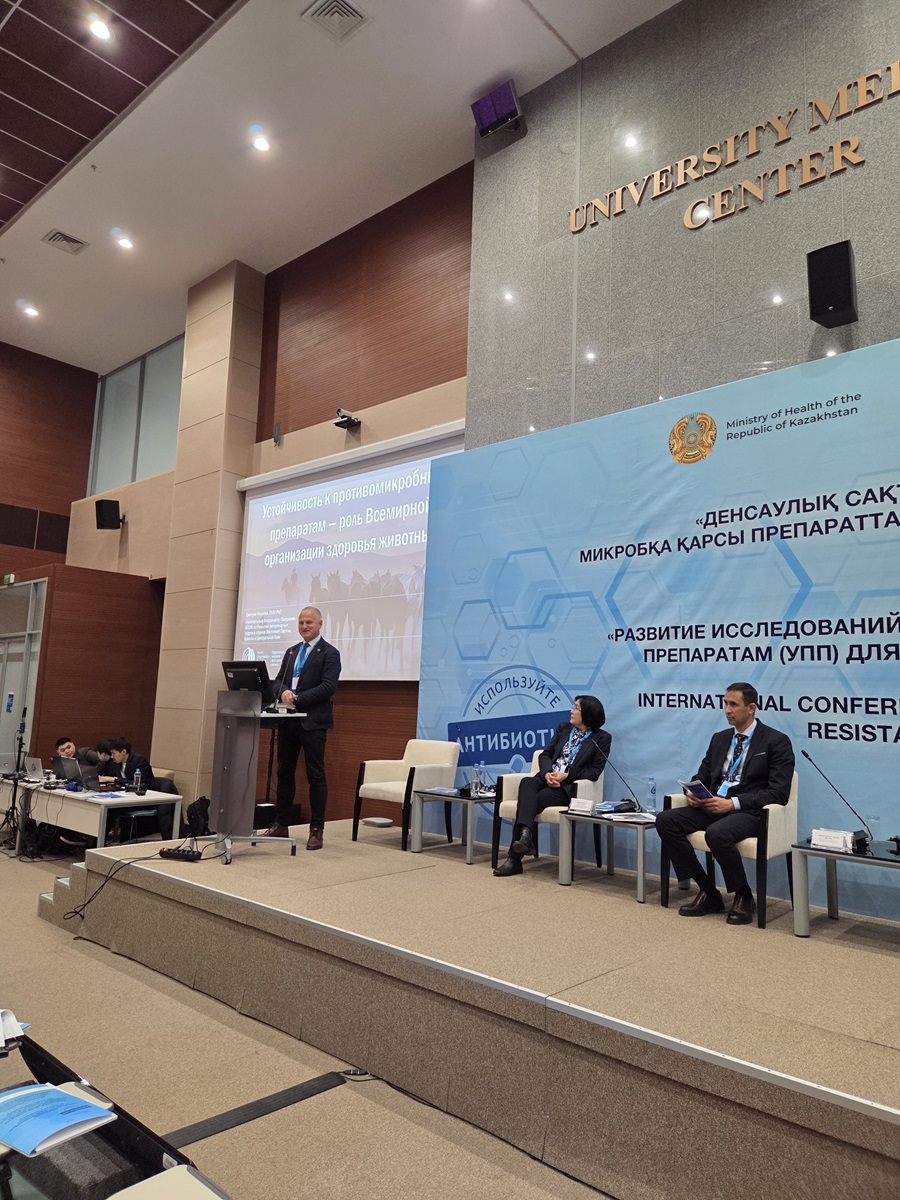
The first day, hosted at the School of Medicine of Nazarbayev University, focused on strengthening systems for monitoring and surveillance of antimicrobial resistance in Kazakhstan. The event was opened by the Ministry of Health of the Republic of Kazakhstan, followed by welcome remarks from representatives of WHO, FAO, WOAH, Nazarbayev University leadership, and other partners.
From the WOAH Representation, Dmitry Morozov delivered a presentation entitled “Antimicrobial Resistance — the Role of the World Organisation for Animal Health.” In his remarks, he emphasized:
Other key issues discussed included the development of national AMR monitoring systems, the use of molecular methods to analyse resistance patterns, the role of external quality assessment for laboratories, and the integration of antimicrobial stewardship into educational programmes.
Special attention was given to strengthening the competencies of veterinary professionals, epidemiologists, and medical and veterinary students.
Representatives of Kazakhstan’s agricultural universities presented the progress made in integrating the One Health concept into their academic programmes.
The second day took place at Astana Medical University and focused on integrating antimicrobial resistance and infection prevention and control (IPC) topics into university curricula.
The Roundtable brought together representatives of the WHO, FAO, and WOAH, as well as academic leaders and faculty members of leading medical and agricultural universities of Kazakhstan. Participants presented the results of self-assessments of their AMR and IPC educational programmes conducted by medical universities in 2025.
WOAH highlighted the importance of preparing future veterinary professionals in line with international standards on the responsible use of antimicrobials, the integration of WOAH Day-1 Competencies into curricula, and the results of recent WOAH missions evaluating AMR-related learning outcomes in university programmes using dedicated tools, which also identified common gaps in competencies across institutions in the region.
During group work, participants developed proposals for further harmonisation of curricula and strengthening training in AMR, pharmacology, epidemiology, microbiology, biosecurity, veterinary surveillance and food safety. These recommendations were incorporated into the roadmap and final resolution of the Roundtable.
The participation of the WOAH Sub-Regional Representation for Central Asia in WAAW-2025 highlighted the Organisation’s commitment to supporting countries of the region in strengthening their Veterinary Services, veterinary education, improving national AMR monitoring systems, and implementing international standards on the responsible use of antimicrobials.
WOAH will continue its cooperation with government authorities, the WHO, FAO, and other partners to reinforce multisectoral collaboration and promote the One Health approach across Central Asia — for the benefit of human, animal, and environmental health.